Does your face feel tight after washing? Do products that once felt comfortable now sting? Understanding what the skin barrier does can help you make sense of these concerns and choose a gentler routine.
Your skin does more than hold your makeup or show your complexion. It separates your body from the outside world. In this guide, I will explain that protective role, what can disturb it, and how to care for your skin without buying every product labelled “barrier repair.”
The skin barrier helps limit water loss and protects against outside irritants and other harm. Its outer protective layer contains skin cells and fats arranged together. When this protection is disturbed, skin may become dry or irritated. [1]
Dryness, stinging, or a rash does not prove one particular diagnosis. Start with gentle care and seek advice for persistent symptoms rather than assuming every concern is a “damaged barrier.” [5]

What the skin barrier does for you
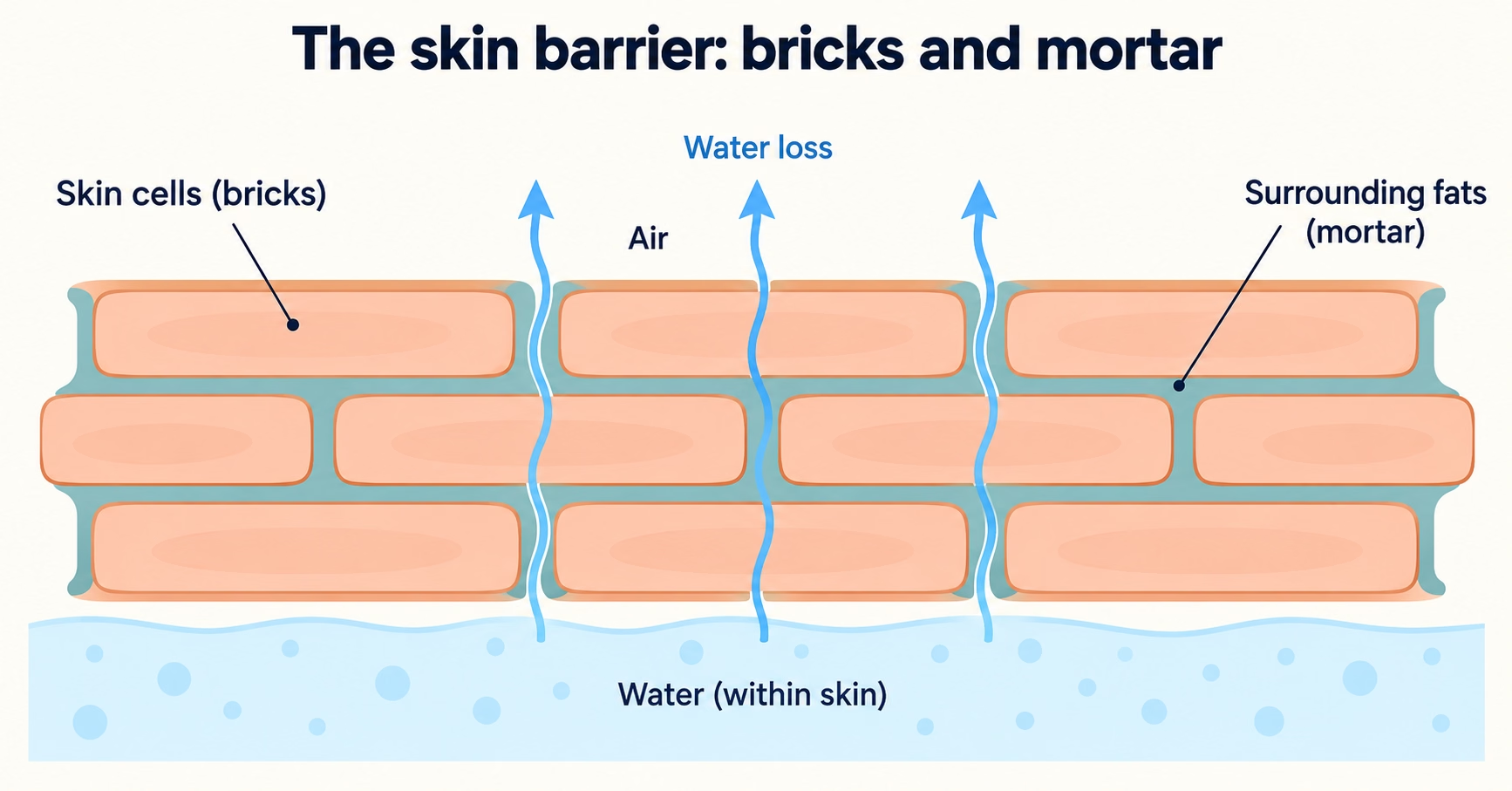
The barrier helps keep the inside protected while controlling what passes through the skin. It is not an airtight seal. Water normally moves through skin; the barrier helps regulate that movement and protects against chemical, mechanical, and microbial harm. [1]
It helps keep moisture in
When too much water escapes, skin can become dry. Harsh cleansing products, long hot showers, and cold, dry surroundings are among the factors that can contribute. [4] That is why a stronger wash is not always a better wash.
It helps keep unwanted substances out
The outer layer helps resist the entry of irritants. It contains flattened cells surrounded by a fatty material. A common teaching picture is a wall: the cells are the bricks and the fats are the material between them. [9]
The wall comparison explains the arrangement; your skin is not literally a wall. It also does not mean that applying one ingredient can fix every problem affecting it.
What is this outer layer called?
The term is stratum corneum, meaning the outermost layer of the epidermis. You do not need to memorise the name. Remember that its cells and surrounding fats work together, rather than thinking of protection as one cream sitting on top. [9]
What might you notice when skin is irritated?
Dryness, itching, cracking, or discomfort deserve attention, but they do not identify the cause on their own. Contact dermatitis, for example, can cause itchy, blistered, dry, and cracked skin after exposure to an irritant or allergen. [5]
Describe what you notice: “my cheeks sting,” “my hands crack,” or “this patch keeps returning.” That is more useful than trying to diagnose yourself from a social-media photograph.
Visible colour changes can also differ across skin tones. A dermatitis reaction may look red on lighter skin or dark brown, purple, or grey on darker skin. Do not look only for bright redness. [5]
Does oily skin mean the barrier is fine?
No. Oiliness is not a home measurement of barrier function. Oily skin still benefits from suitable moisturising according to the AAD. [7] Record shine and discomfort separately rather than assuming one cancels out the other.
Which everyday habits can disturb skin?
Harsh washing, irritating products, and repeated exposure to triggers can contribute to problems. Soaps and detergents can cause irritant contact dermatitis; allergy is a different possibility. [5] A reaction is not automatically evidence that a product is “working.”
| Habit | Why reconsider it? | Gentler approach |
|---|---|---|
| Long, hot washing | Can contribute to dryness. [4] | Use warm water and shorter showers. |
| Scrubbing to feel clean | Can irritate facial skin. [8] | Cleanse with fingertips; pat dry. |
| Adding several products together | Makes the cause of a reaction harder to track. | Introduce changes individually. |
| Repeating a troublesome product | May repeat exposure to a trigger. [5] | Review the reaction and seek advice. |
For an Indian reader, context helps. Note outdoor travel, your work environment, the season, and what you apply after washing. A day in humid weather and a day in an air-conditioned office are different situations. India does not have one climate or one skin type.
“Before adding another product, ask whether your routine is keeping your skin comfortable or repeatedly irritating it.”
How to support your skin barrier with everyday care
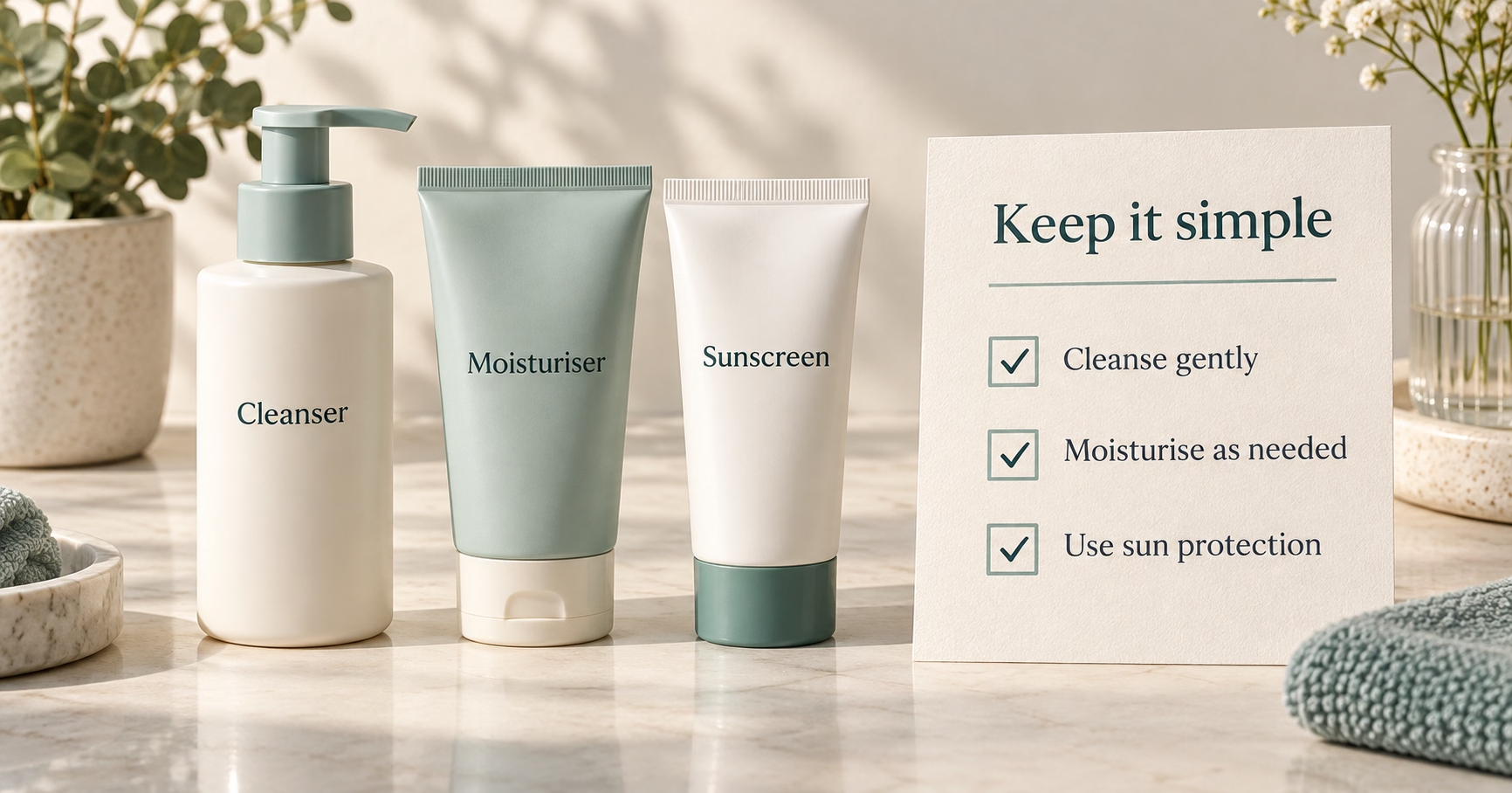
Keep your routine gentle and give each product a clear purpose. Cleansing, moisturising, and sun protection are a useful basic foundation. You do not need a long shopping list to begin. [7]
- Review recent changes. Record new products and when discomfort started. Timing gives a clue, not proof.
- Wash gently. Use a gentle cleanser, lukewarm water, and fingertips. Avoid scrubbing and pat dry with a soft towel. [8]
- Choose suitable moisture care. For dry skin, fragrance-free creams or ointments can be useful. Apply moisturiser after washing, while skin is still slightly damp. [3]
- Keep sun protection in your routine. Use shade, protective clothing, and a suitable sunscreen. Moisturiser does not replace sun protection. [7]
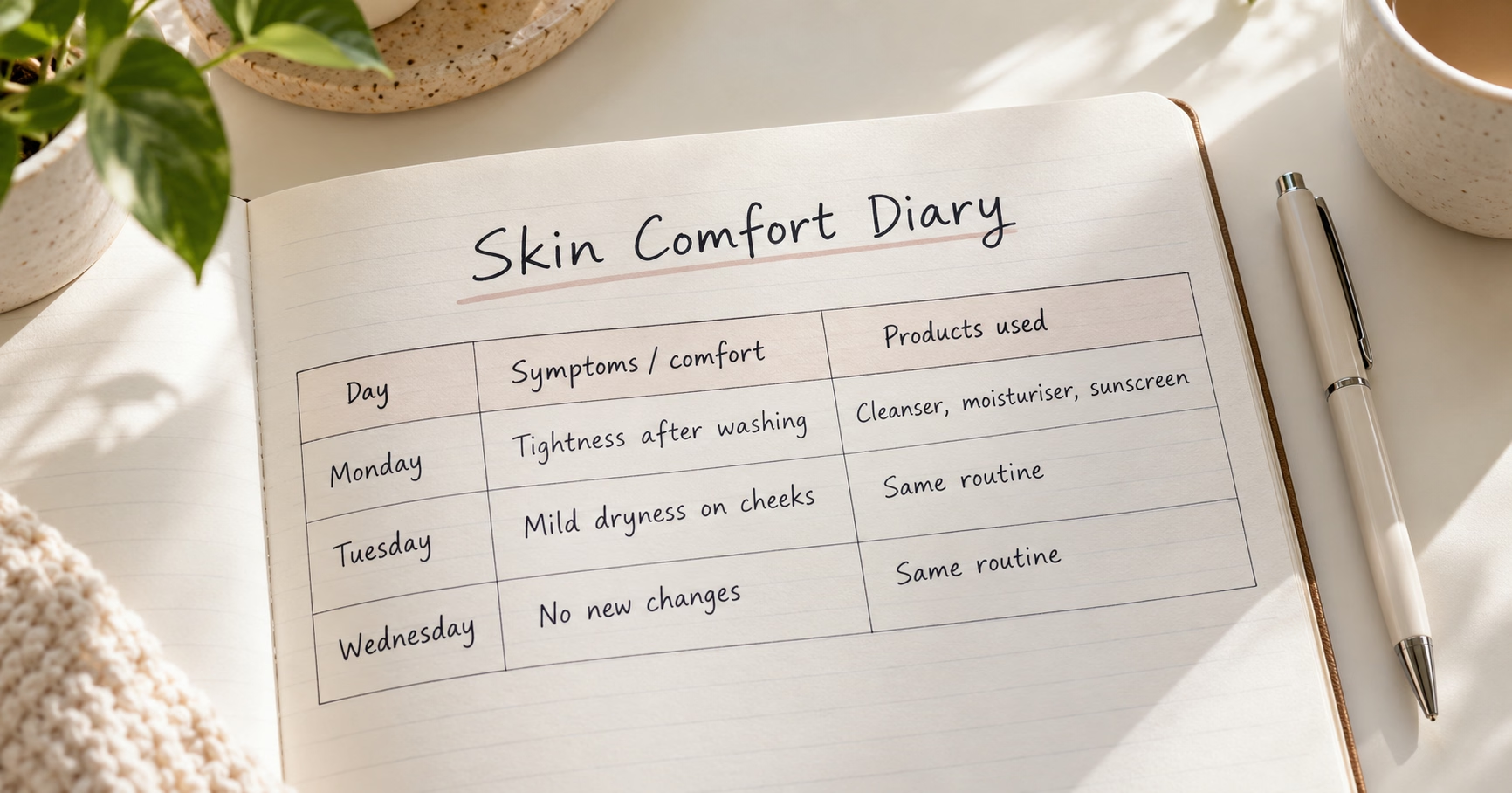
- Review how your skin responds. Keep notes and seek advice if discomfort persists or worsens.
Make your care plan easy to follow
Write down the products you use in the morning and evening. Next to each, add its purpose. If you cannot explain why you use a step, make that a question to discuss rather than buying a replacement immediately.
For your notes, try: “My skin felt comfortable before washing, tight afterwards, and better after moisturiser.” Another entry might describe discomfort that stayed all day. These are sample observations, not clinical results or a test of barrier function.
Keep the plan realistic for your budget and daily schedule. A routine you understand is easier to discuss and review than a collection of products bought for different online trends.
If a non-prescribed exfoliant or other cosmetic clearly irritates you, stop using it rather than adding something to cover up the discomfort. For prescribed treatment, ask your prescriber how to handle the reaction.
You do not need to leave irritated skin bare to “test” it. Nor should you scrub off flakes to see what is underneath. Let your observations guide a sensible conversation, rather than repeatedly challenging uncomfortable skin.
Do you need a special barrier repair product?
The label alone is not enough to decide. Look at the product’s purpose, directions, finished formula, and your own response. A familiar ingredient on the front of a pack does not prove that the whole product will suit you.
What moisturiser ingredients do
Moisturisers can combine different jobs: humectants such as glycerin help hold water, emollients soften rough skin, and occlusive ingredients such as petrolatum help reduce water escaping from the surface. These roles can overlap. [2]
Ceramides are among the fats associated with the skin’s barrier structure. [1] That explains why they appear in barrier-focused products, but it does not prove that every ceramide product performs equally or treats a skin disease.
For a limited budget, first review what you already own. A comfortable product with a clear role may be more useful than several overlapping purchases. Avoid judging quality by price or the number of highlighted ingredients alone.
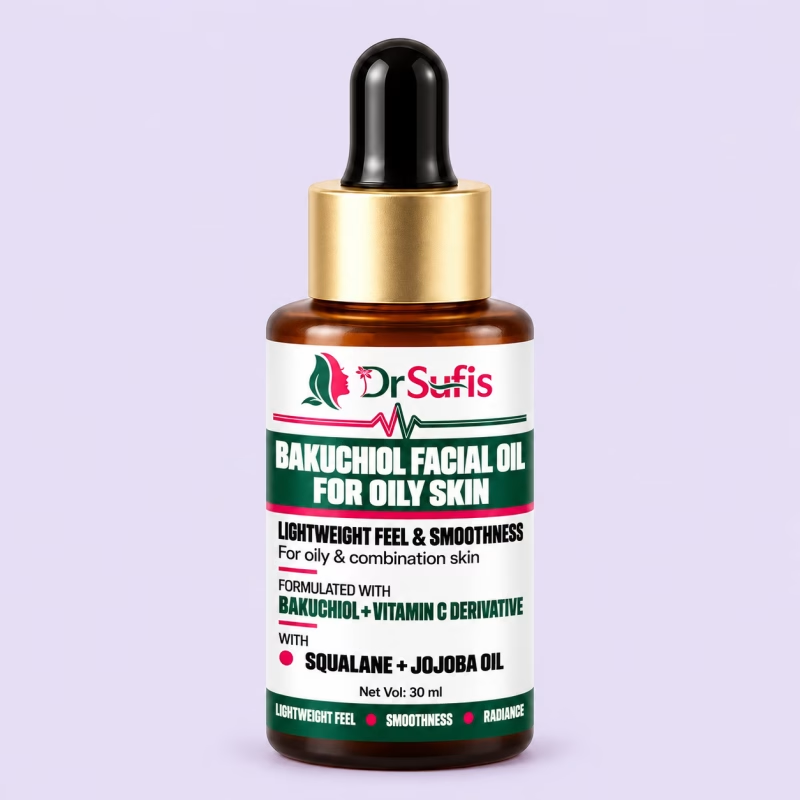
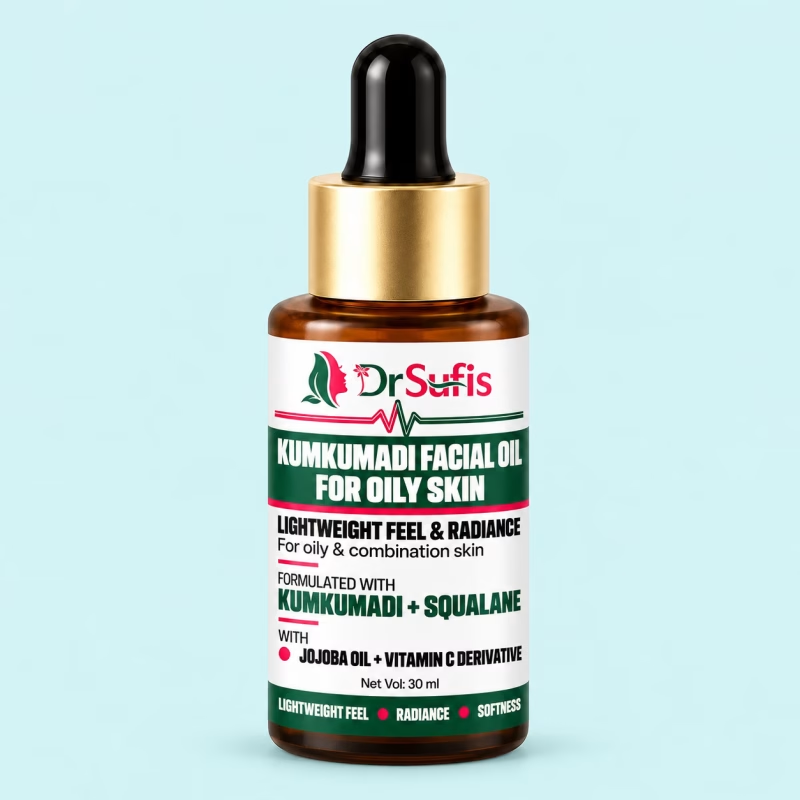
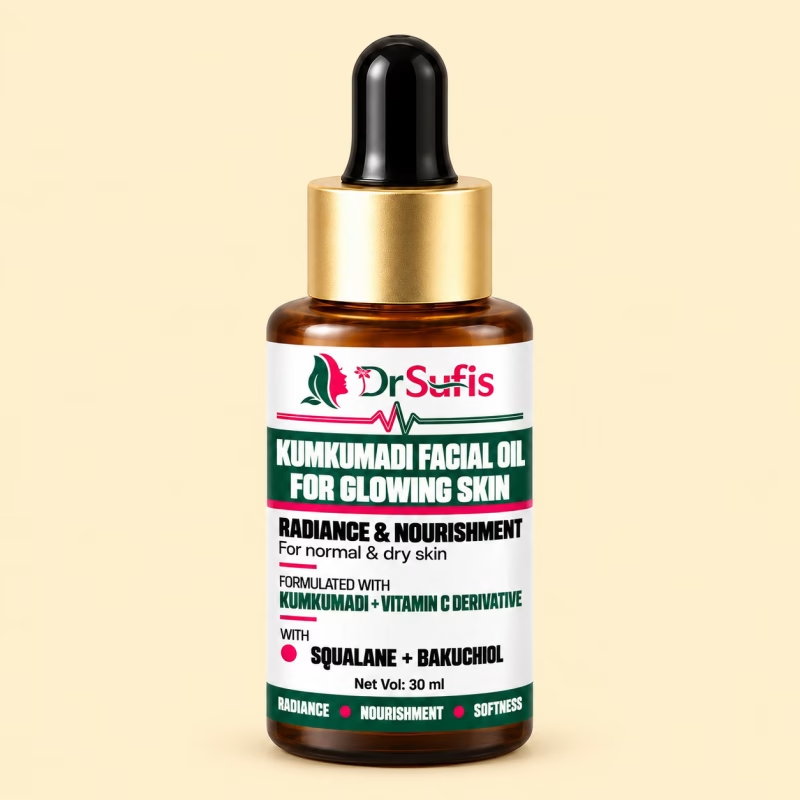
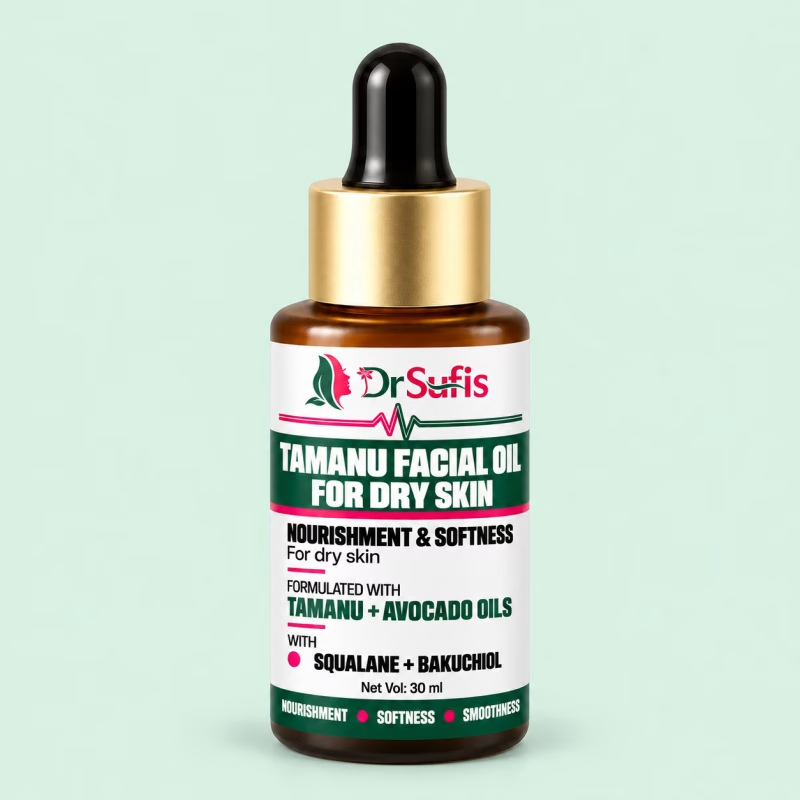
Dr Sufi’s Wellness is Dr Sufia’s personal care brand. This guide does not require you to purchase a particular product. Any recommendation should match verified product details and your actual concern.
How long does improvement take, and when should you get help?
There is no universal repair deadline for every cause of discomfort. Ask what changes to expect and when to review them. A product’s promised timeline should not persuade you to ignore a worsening rash.
Seek medical advice for persistent, recurring, or severe symptoms. A clinician may need to identify a trigger or another skin condition; moisturising alone is not always the whole treatment. [5]
Get prompt medical advice if symptoms worsen rapidly, you notice discharge, pain increases, or you feel unwell, hot, or shivery. These can be signs of infection. [6]
Take a simple record of products, symptoms, and timing. Include prescribed treatment. Do not change several things before an appointment simply to make your routine look more impressive.
Frequently asked questions
Is the skin barrier only on my face?
No. Your body’s skin also performs barrier functions. [1] Describe the affected area when seeking advice; a face routine does not automatically address every body concern.
Does stinging prove my barrier is damaged?
No. Stinging is a symptom, not a complete diagnosis. Record the product and reaction, and seek advice if it persists or keeps returning.
Should I wash more often to remove irritating products?
Repeated washing is not a general solution. Gently remove a troublesome cosmetic, stop using it, and ask for advice if symptoms continue. Avoid scrubbing.
Can I judge barrier health from pore size?
Do not use pore appearance as a diagnosis. Describe discomfort, visible changes, and timing instead. A photograph cannot answer every question about skin function.
Do I need to stop every active ingredient forever?
Not automatically. Review what irritates your skin and discuss restarting products when appropriate. Ask your prescriber about prescribed treatments rather than stopping the plan yourself.
Should a new moisturiser feel uncomfortable?
Do not assume burning means benefit. The AAD advises discussing burning or irritation from products, including moisturiser, with a dermatologist. [3]
Your next step
List your routine and identify what each step does. Note discomfort and recent changes before adding another product. Aim for gentle, purposeful care—and get help when symptoms need assessment.
Review the everyday care stepsReferences and further reading
- DermNet: Skin barrier function.
- DermNet: Emollients and moisturisers.
- American Academy of Dermatology: Tips for relieving dry skin.
- American Academy of Dermatology: Dry skin causes.
- NHS: Contact dermatitis.
- NHS: Contact dermatitis symptoms.
- American Academy of Dermatology: Skin care on a budget.
- American Academy of Dermatology: Face washing 101.
- DermNet: Barrier cream.