Does your face feel tight even when your nose looks shiny? Have you bought a hydrating serum but still found rough patches on your cheeks? Understanding dry vs dehydrated skin can help you ask better questions before changing your routine.
These labels are often presented as two completely different problems. In practice, they overlap. I will explain what the words mean, what your observations can tell you, and how to choose sensible care without relying on a quick online test.
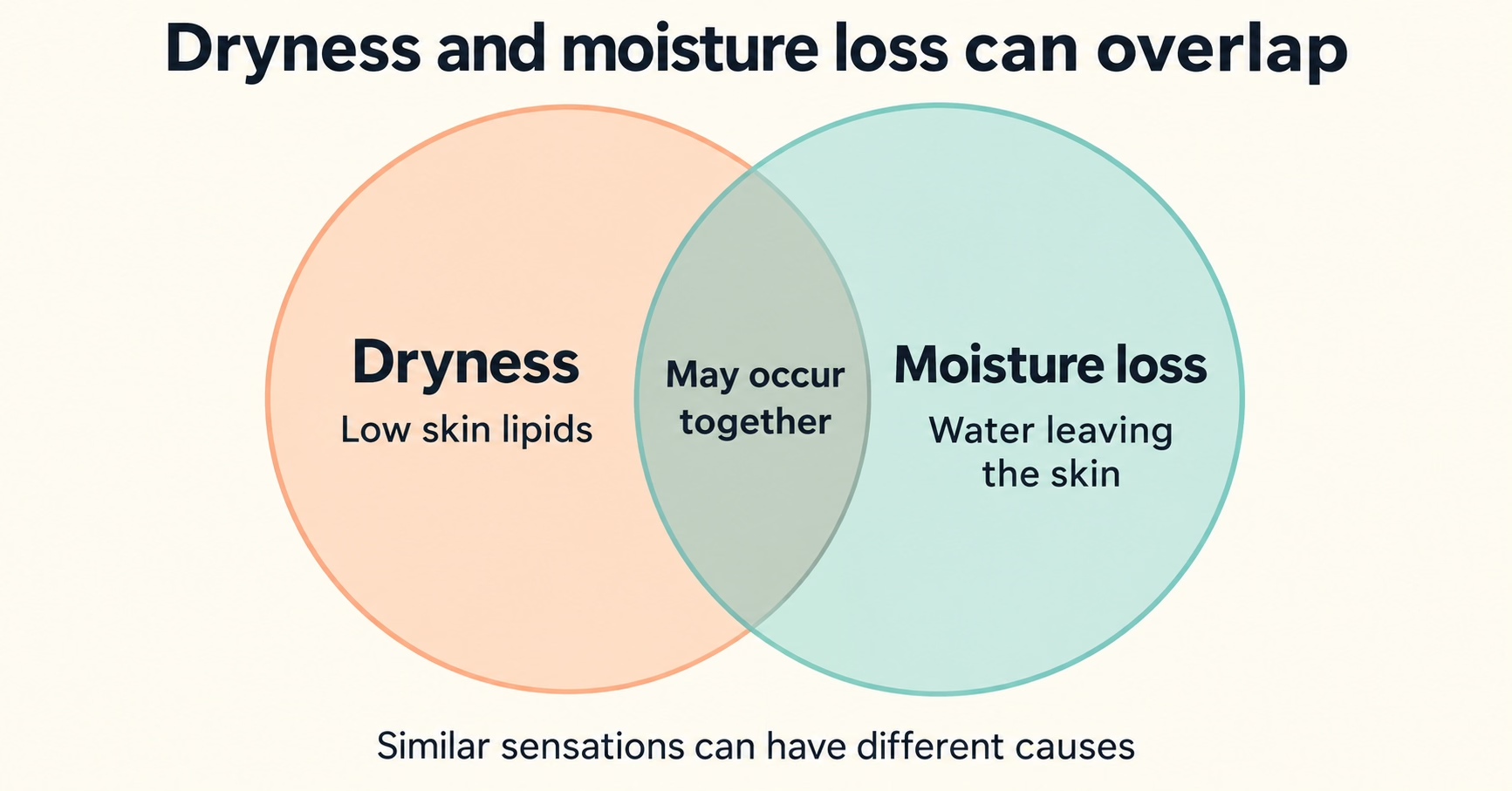
Dry skin describes skin lacking sufficient moisture in its outer layer. “Dehydrated skin” is often used in skin care to emphasise low water content, but it is not a separate diagnosis you can reliably identify at home. Dryness involves how skin holds water and the fats that support its protective layer. [1]
So “dry skin lacks oil, dehydrated skin lacks water” is a useful marketing shorthand, not the whole explanation. The AAD explicitly describes excessively dry skin as dehydrated. [2]

Dry vs dehydrated skin: what do the terms mean?
The difference is more useful as a conversation about moisture than as a strict either-or classification. Ask what is happening, what may be contributing, and what care is appropriate.
What is dry skin?
Dry skin can feel rough, look scaly, or develop cracks. Its outer layer is not holding moisture effectively. DermNet explains that changes in the skin barrier, including its fats and water-holding capacity, contribute to dryness. [1]
Some people have a long-standing dry tendency. Others develop dryness after changes in products, surroundings, age, or health. A tendency can persist or improve when contributing factors are addressed. It is not always a permanent label. [1]
What does dehydrated skin mean?
In everyday beauty advice, it usually means skin with insufficient water or a feeling of lost moisture. However, this description does not identify the cause. Dryness, itching, and more noticeable fine lines can accompany moisture loss, but none is a unique home test for dehydration. [2]
Do not let the word persuade you that you need a separate serum before understanding your routine. Describe the actual concern first.
| Question | Dry skin | Dehydrated skin |
|---|---|---|
| What does it describe? | Dryness linked to insufficient moisture in the outer layer. | A common skin-care description emphasising low water content. |
| Are the categories separate? | Not completely. | Can overlap with dry skin. |
| Does it explain the cause? | No; causes vary. | No; the word alone does not diagnose anything. |
| What is the next step? | Review symptoms, routine, and contributing factors. | Use the same review rather than buying by the label alone. |
Can oily skin feel dry or uncomfortable?
Yes. Shine does not mean you should ignore dryness or discomfort. The AAD recommends suitable moisturising even for oily skin and cautions against harsh cleansing and scrubbing. [8]
You might notice a shiny forehead alongside tight cheeks. Keep both observations instead of deciding the whole face needs the strongest oil-removing wash. Different areas may need different attention.
Does tightness prove dehydration?
No. Tightness is a useful symptom to record, not proof of one cause. Harsh cleaning products and long, hot showers can contribute to dryness. [3] Consider what happened before the sensation started.
Flakes, cracking, or ongoing itch also deserve attention. The AAD describes these among symptoms of excessive dryness. [2] Do not assume every change can be solved by adding water to the skin.
Skin moisture is not the same as whole-body dehydration
Whole-body dehydration means losing more fluid than you take in. Signs can include thirst, dark urine, urinating less, dizziness, and a dry mouth. [6] A tight cheek alone does not establish that diagnosis.
Maintain appropriate fluid intake, especially when losing fluids, but do not expect a cosmetic serum to treat whole-body dehydration. If you have a prescribed fluid restriction, follow your clinician’s advice rather than an online water target.
“Start with what your skin feels like and what changed in your routine. A useful description is more valuable than forcing yourself into a label.”
How to assess your concerns without a home diagnosis
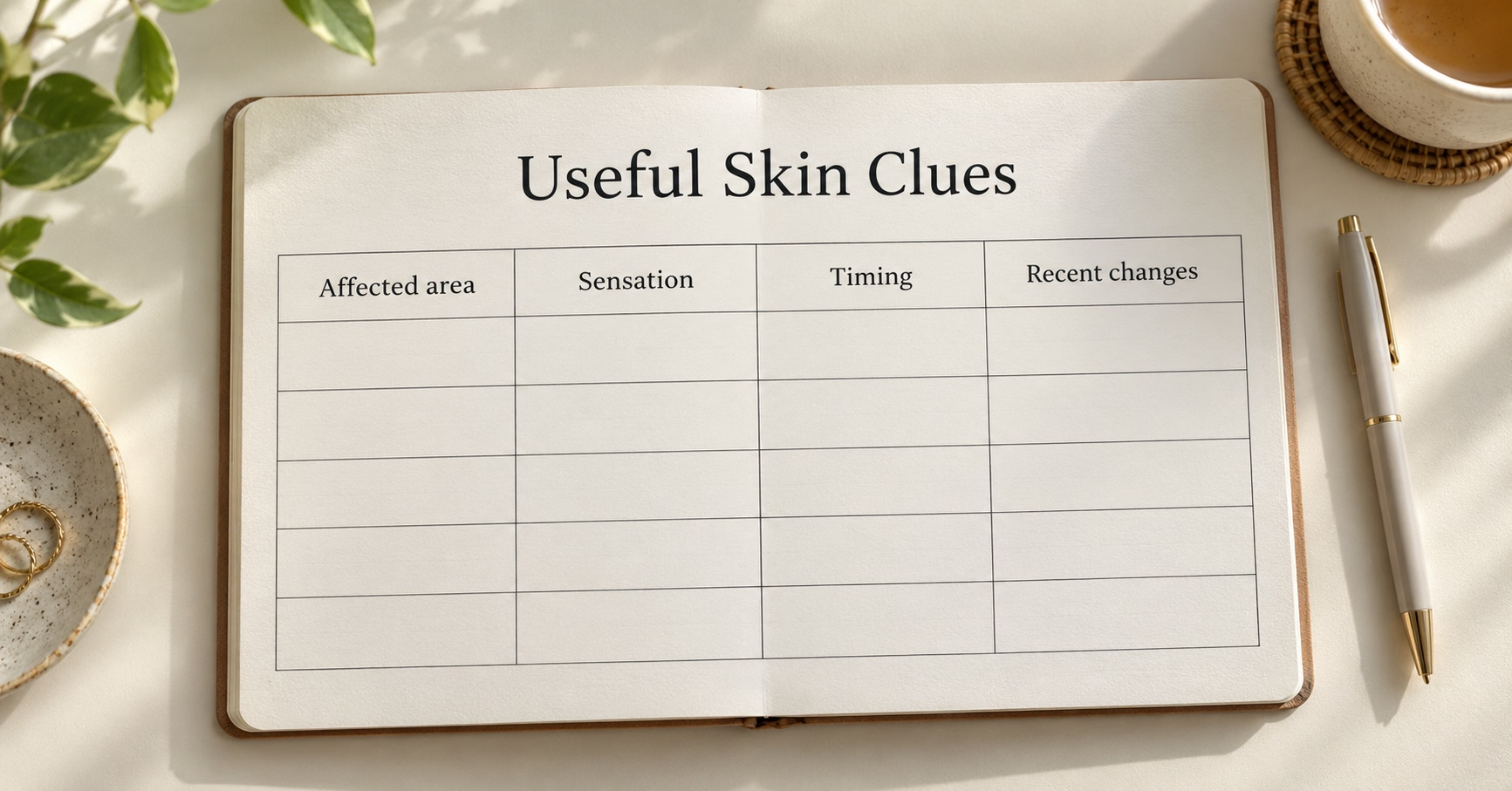
Record patterns and recent changes instead of trying to prove oil loss or water loss yourself. A short diary can make your questions clearer.
- Note the location. Are your cheeks, lips, hands, or legs affected? Describe each area separately.
- Describe the sensation. Write tight, rough, itchy, flaky, or sore rather than simply “bad skin.”
- Record the timing. Does it happen after washing, throughout the day, or after one product?
- List recent changes. Include products, medicines, travel, and your usual surroundings. Timing is a clue, not proof.
- Decide whether advice is needed. Persistent or worsening symptoms deserve assessment.
For example: “My cheeks felt comfortable before washing but tight afterwards.” Another note could say: “My hands feel dry throughout the day.” These are examples, not patient stories or diagnostic results.
For an Indian reader, record your city, season, outdoor travel, and time in air-conditioned spaces. India has many climates. Avoid buying something merely because its label says it suits “Indian skin.”
Do not repeatedly pinch, stretch, scrub, or leave uncomfortable skin without moisturiser to force a test result. You can ask for help even if you cannot name your skin type.
What care can help when skin feels dry?
Begin with gentler washing and suitable moisturising, while reviewing anything that irritates you. For dry skin, the AAD recommends warm rather than hot water, gentle products, and fragrance-free creams or ointments. [5]
- Keep washing comfortable. Avoid long, hot showers and rough rubbing. Pat skin dry.
- Apply moisturiser after washing. Slightly damp skin is a useful time to apply it.
- Review new cosmetics. Stop a non-prescribed product that clearly irritates you. Ask your prescriber about reactions to prescribed treatment.
- Keep sun protection. Shade, clothing, and suitable sunscreen remain part of everyday care. [7]
Choose one clear goal, such as less discomfort after washing. Avoid changing everything together. If you add several products at once, you will have fewer clues about which change helped or caused a problem.
A basic routine can be more manageable than several overlapping treatments. Write down what each step does. If you cannot explain its purpose, make that a question before making another purchase.
Do you need hydration, moisturising, or both?
A moisturiser can do several jobs in one formula. Humectants such as glycerin help retain water, emollients soften skin, and occlusive ingredients help reduce water escaping from the surface. These functions often overlap. [4]
That is why “hydrating” and “moisturising” on packaging do not always represent two products you must buy. Read the directions and consider the finished formula.
Is a serum necessary?
Not simply because someone used the word dehydrated. Check whether your current moisturiser and cleansing habits meet your needs before adding another step. A highlighted ingredient does not guarantee suitability or results.
Should you choose a gel or a cream?
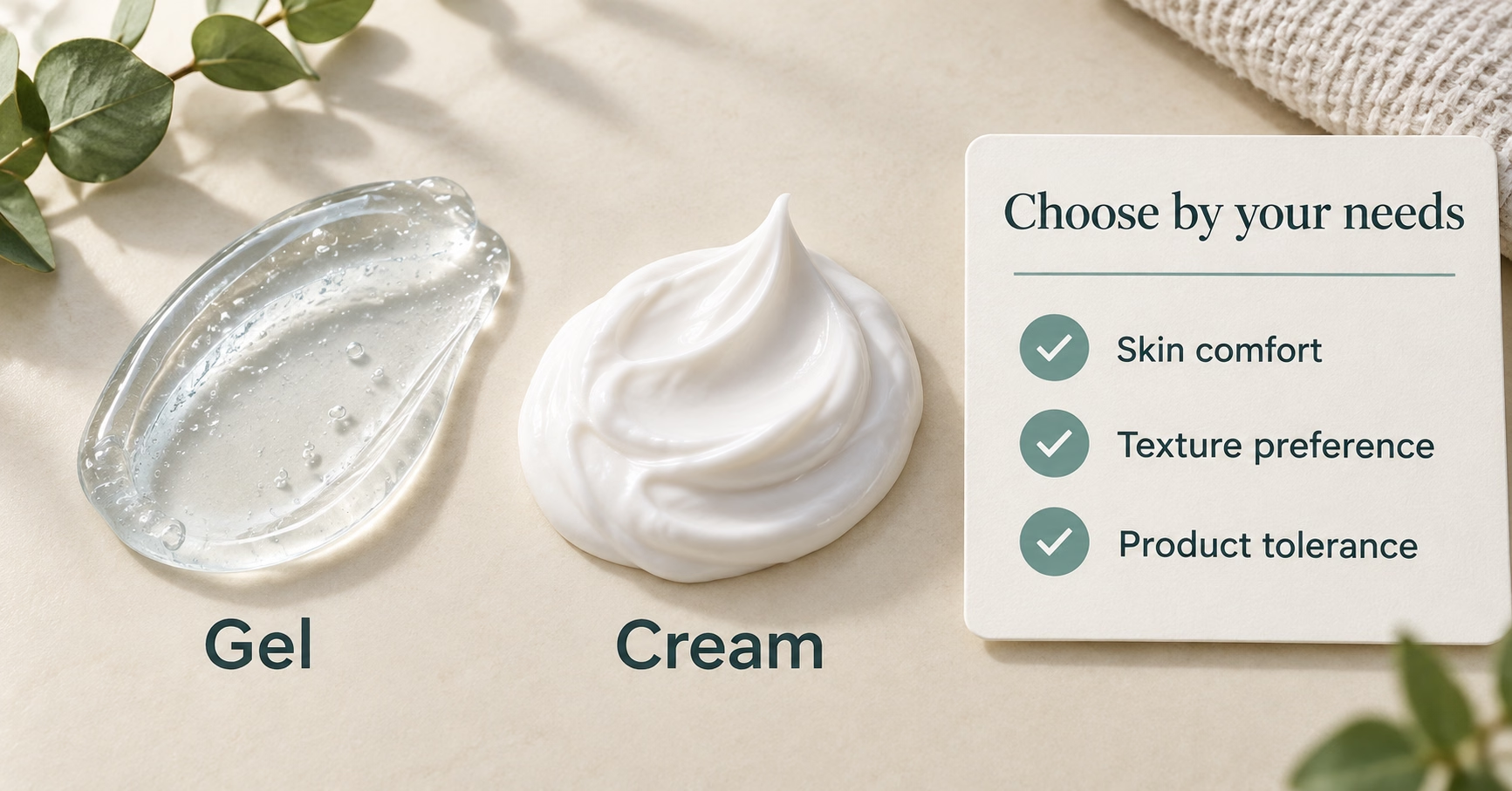
Consider the severity of dryness, comfort, tolerance, cost, and availability. DermNet lists these as useful factors when selecting an emollient. [1] If you are unsure, ask for individual guidance rather than judging texture alone.
Dr Sufi’s Wellness is Dr Sufia’s personal care brand. This guide does not require a particular purchase. Any recommendation should match verified product details and your actual concern.
When should you seek professional advice?
Get advice if dryness persists despite gentle care, or if products cause burning or irritation. The AAD notes that persistent excessive dryness may have an underlying cause needing assessment. [5]
There is no universal improvement deadline. Ask what to monitor and when to review progress. A promised “instant hydration” result should not persuade you to ignore worsening symptoms.
For possible whole-body dehydration, get urgent medical advice if you have persistent dizziness when standing, very little urine, unusual drowsiness, or a fast heartbeat. [6] Do not treat these as a skin-care shopping problem.
Frequently asked questions
Can dry skin also be dehydrated?
Yes. The terms overlap. Excessively dry skin can have lost considerable moisture. [2] You do not need to choose only one label.
Does a shiny face mean I should skip moisturiser?
No. The AAD recommends moisturising oily skin too. [8] Choose care that feels suitable rather than trying to remove every trace of oil.
Can a pinch test choose my facial products?
Do not use it as a shopping diagnosis. Describe your symptoms and routine instead, and seek assessment when needed.
Should I exfoliate away dry flakes?
Do not assume flakes mean you need stronger exfoliation. Avoid adding an irritating step and review the dryness first.
Is an expensive hydrating serum essential?
No. Price and product category do not establish need. Start with a clear purpose and review what your existing routine already provides.
What if my face and hands feel different?
Record them separately. Their routines and exposures may differ, so describe each concern when seeking advice.
Your next step
Write down where skin feels dry, when it happens, and what changed. Review washing and moisture care first. Use those observations to guide a sensible purchase or professional conversation.
Review the observation stepsReferences and further reading
- DermNet: Dry skin.
- American Academy of Dermatology: Dry skin symptoms.
- American Academy of Dermatology: Dry skin causes.
- DermNet: Emollients and moisturisers.
- American Academy of Dermatology: Tips for relieving dry skin.
- NHS: Dehydration.
- American Academy of Dermatology: Skin care on a budget.
- American Academy of Dermatology: Oily skin care.