You may usually have oily skin, yet suddenly find your cheeks dry and uncomfortable. Or your skin may feel balanced until a new product starts to sting. Understanding skin type vs skin condition helps you describe these changes without assuming your whole skin type has changed overnight.
In this guide, I will help you separate your usual skin pattern from a current concern. That distinction can make your next care decision clearer and help you avoid buying products for the wrong problem.
Skin type describes your usual pattern of oiliness or dryness. Skin condition describes a current concern or a diagnosed problem affecting your skin. The same person can have a skin type and several concerns at once. Neither label, by itself, explains the cause or tells you which treatment you need.
Some conditions are temporary; others are long-lasting or come and go. Skin type can also change over time, so “type is permanent and condition is temporary” is too simple. [2] [5]

Skin type vs skin condition: what is the difference?
Think of skin type as a description of your usual pattern, and skin condition as something else that needs attention. These are helpful care terms, not two perfectly separate medical categories. A description helps organise your observations; a diagnosis identifies a particular disorder.
What does skin type describe?
The common labels are oily, dry, combination, and normal or balanced. Oily skin tends to look shiny or feel greasy. Dry skin may feel rough or flaky. Combination skin has different patterns in different areas. Balanced skin has neither a strong oily nor dry pattern. Sensitive skin is also commonly listed. [1]
Use the label as a starting point, not a rule that every product must follow. “Normal” does not mean better, and your face does not need to match a filtered photograph to be healthy-looking.
What does skin condition describe?
In everyday skin care, people use “condition” for concerns such as dryness or irritation. In medicine, it can mean a diagnosed disorder such as acne or contact dermatitis. Acne can involve blackheads, whiteheads, and inflamed spots. Contact dermatitis is an inflammatory reaction after contact with an irritant or allergen. [6] [5]
That is why naming a concern is different from knowing its cause. “My skin is itchy” is an observation. “I have an allergy” is a conclusion that may need professional assessment.
| Question | Skin type | Skin condition or concern |
|---|---|---|
| What am I describing? | Your usual oily, dry, mixed, or balanced pattern. | A symptom, concern, or diagnosed problem. |
| What should I record? | What tends to happen across ordinary days. | What changed, where, and when. |
| Does the label explain the cause? | No. | A symptom label does not; a diagnosis may clarify it. |
| How does it guide care? | Helps narrow everyday product choices. | May require a routine adjustment or medical care. |
Can a skin type and a skin condition overlap?
Yes. Your usual pattern does not describe every change or concern. Keep both pieces of information rather than replacing one label with another whenever something happens.
Oily skin that feels dry after washing
A harsh cleanser or long, hot shower can contribute to dryness. [3] If your face usually looks oily but feels tight after a new wash, record both observations. Do not automatically decide you now need the strongest dry-skin product.
Combination skin with irritation
A person might describe an oily nose, comfortable cheeks, and a newly itchy patch. That is an example of separate observations, not a patient case or diagnosis. The patch deserves attention even if the rest of the routine seems suitable.
Sensitivity alongside another skin pattern
Sensitivity can occur with oily, dry, or combination skin. [2] DermNet also explains that sensitive skin can have several causes, including underlying skin disorders. [4] Record reactions rather than assuming “sensitive” means you know the cause.

Does sensitivity always mean allergy?
No. Irritation and allergy are different possibilities. An irritant can directly damage the skin’s outer layer; an allergen triggers an immune response. [5] You cannot reliably tell which is happening just from a product’s marketing label.
Write down the reaction, the product, and when it happened. Avoid deliberately reapplying something that caused a troublesome reaction just to prove your theory. Ask for assessment if the problem persists or returns.
Dryness and dehydration
These terms overlap more than marketing sometimes suggests. When skin loses water too quickly, it becomes dry; harsh products, climate, and other factors can contribute. [3] Do not try to identify the exact cause from a single home test.
“Describe what your skin usually does, then describe what has changed. Both matter when deciding your next care step.”
How to describe your skin without guessing
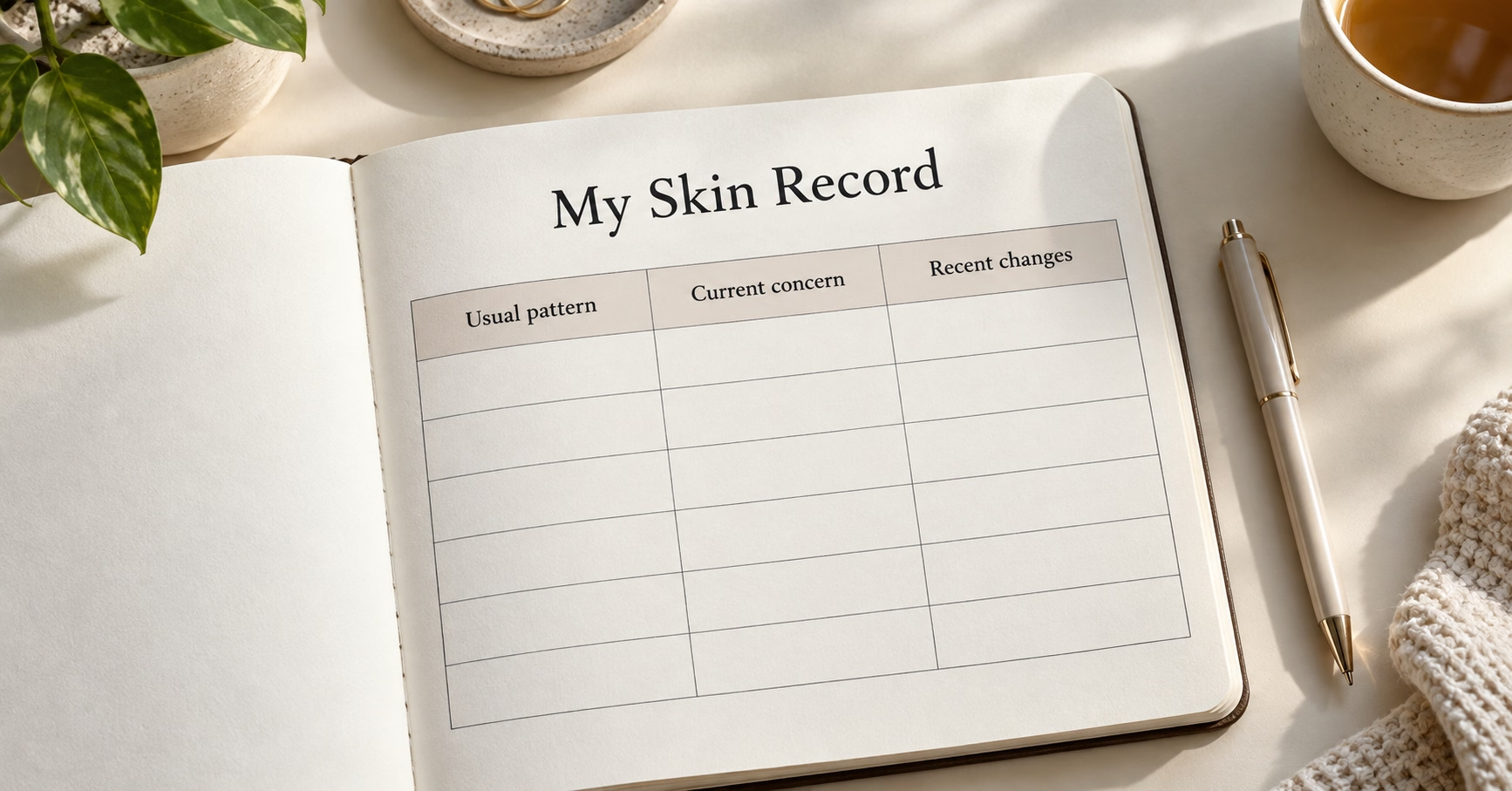
Use a short record of your usual pattern, current symptoms, and recent changes. The aim is to explain your situation clearly, not diagnose yourself.
- Write your usual pattern. Where do you normally notice shine or dryness? If unsure, say so.
- Name the current concern. Use plain words such as itchy, tight, sore, flaky, or spotty.
- Record the location and timing. Note whether it affects one patch or several areas, and when you first noticed it.
- List recent changes. Include new products, a changed routine, or prescribed treatment. Timing is a clue, not proof of cause.
- Choose the next action. Decide whether you need simpler everyday care or help assessing a persistent problem.
For example, write: “My forehead usually gets shiny. My cheeks started to sting after I changed face wash.” That is more useful than writing only “combination skin.” Keep the product name and directions with your notes.
In India, add practical context: your city, season, outdoor travel, and time spent in air-conditioned rooms. Avoid comparing two very different situations as though nothing changed. There is no single skin type shared by everyone in India.
You do not need to buy a testing device or several new products to make this record. A notebook is enough. If taking photos, use similar lighting and avoid beauty filters; the pictures support your description rather than establish a diagnosis.
How should the difference guide your routine?
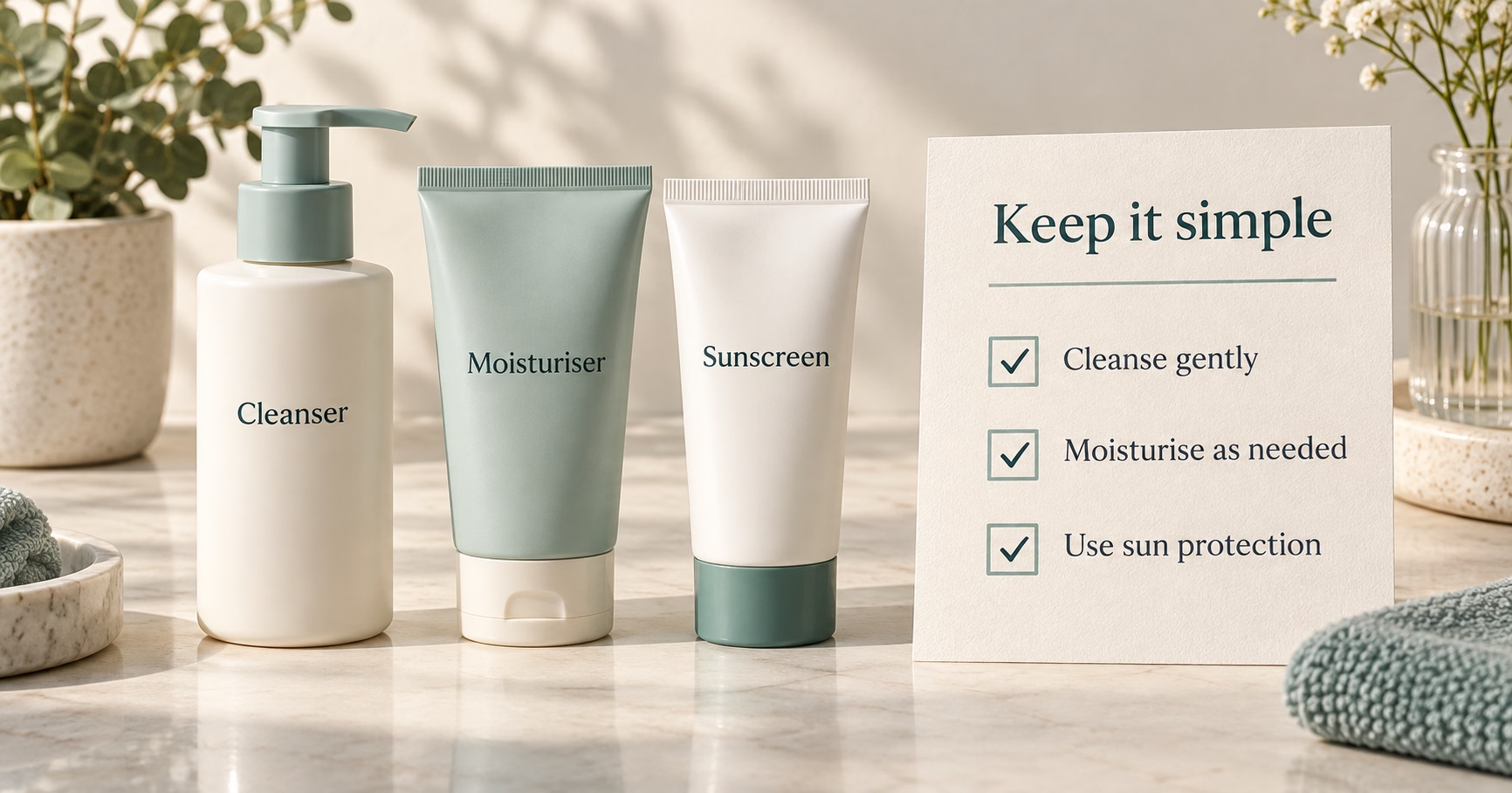
Use your usual pattern to guide basic care, while taking the current concern seriously. The AAD recommends a simple foundation of cleansing, moisturising, and sun protection. More products are not automatically better. [1]
Before adding anything, ask: what am I trying to improve, and what would a helpful result look like? “I want less discomfort after washing” is a clearer goal than “I want perfect skin.” Avoid changing several products together, because you will lose track of what changed.
A moisturiser may support comfortable everyday care, but a cosmetic label does not identify or treat every cause of a rash. Contact dermatitis may need avoidance of the trigger and appropriate treatment. [5] Follow individual advice when a condition has been diagnosed.
What improvement should you expect?
There is no single timeline for every concern. Ask what you should monitor and when to review progress. Do not use a promise on a product label as a reason to ignore worsening discomfort.
This article explains how to organise your choices; it does not recommend a specific product. Dr Sufi’s Wellness is Dr Sufia’s personal care brand. Product suitability still depends on verified details and your needs.
Common mistakes and when to seek advice
Do not use a skin-type label to explain away persistent symptoms. Seek medical advice for a rash or irritation that is persistent, recurrent, or severe. [5]
- Assuming every condition is temporary: some need ongoing care.
- Calling every bump acne: several skin disorders can resemble it. [7]
- Assuming stinging proves effectiveness: record the reaction and reconsider the product.
- Copying another person’s routine: compare needs before copying purchases.
If you use prescribed treatment, ask your prescriber about new reactions rather than changing the plan yourself. Take your notes and product list to the appointment.
Frequently asked questions
Does normal skin mean I cannot develop a skin concern?
No label should make you ignore a new symptom. Record a change separately from your usual pattern and seek advice when needed.
Does a sudden change mean my skin type changed permanently?
Not necessarily. Compare your usual pattern with recent events before drawing that conclusion. One unusual day is not enough to settle it.
Is a skin condition always a disease?
No. Everyday product advice may use the term for a concern, while medical advice may refer to a diagnosed disorder. Ask what the term means in context.
Should I change my entire routine when one area feels different?
Start by describing the affected area and concern. Replacing everything at once may make the change harder to understand. Seek advice for ongoing discomfort.
Can a product quiz diagnose my condition?
Treat a shopping quiz as help organising choices, not a medical diagnosis. Its result should not replace assessment of persistent symptoms.
What should I do if I cannot choose a label?
Describe your symptoms without choosing one. Clear notes about location, timing, and product use are useful even when you are unsure of your type.
Your next step
Write two sentences: “My skin usually…” and “Recently, I noticed…”. Use both to guide your next question, purchase, or appointment. You do not need a perfect label to begin understanding your skin.
Use the observation stepsReferences and further reading
- American Academy of Dermatology: Skin care on a budget.
- Cleveland Clinic: Understanding skin types.
- American Academy of Dermatology: Dry skin causes.
- DermNet: Sensitive skin.
- NHS: Contact dermatitis.
- American Academy of Dermatology: Acne overview.
- American Academy of Dermatology: Conditions that resemble acne.