Have you seen “pH balanced” on a face wash and wondered whether it really matters? Or heard that acidic skin is healthy and assumed a stronger acid must be better? Here is skin pH explained in everyday language, without turning your bathroom into a chemistry laboratory.
I will help you understand the numbers, the skin’s protective surface, and the limits of product claims. You can use this knowledge to ask clearer questions and choose care without chasing one supposedly perfect pH.
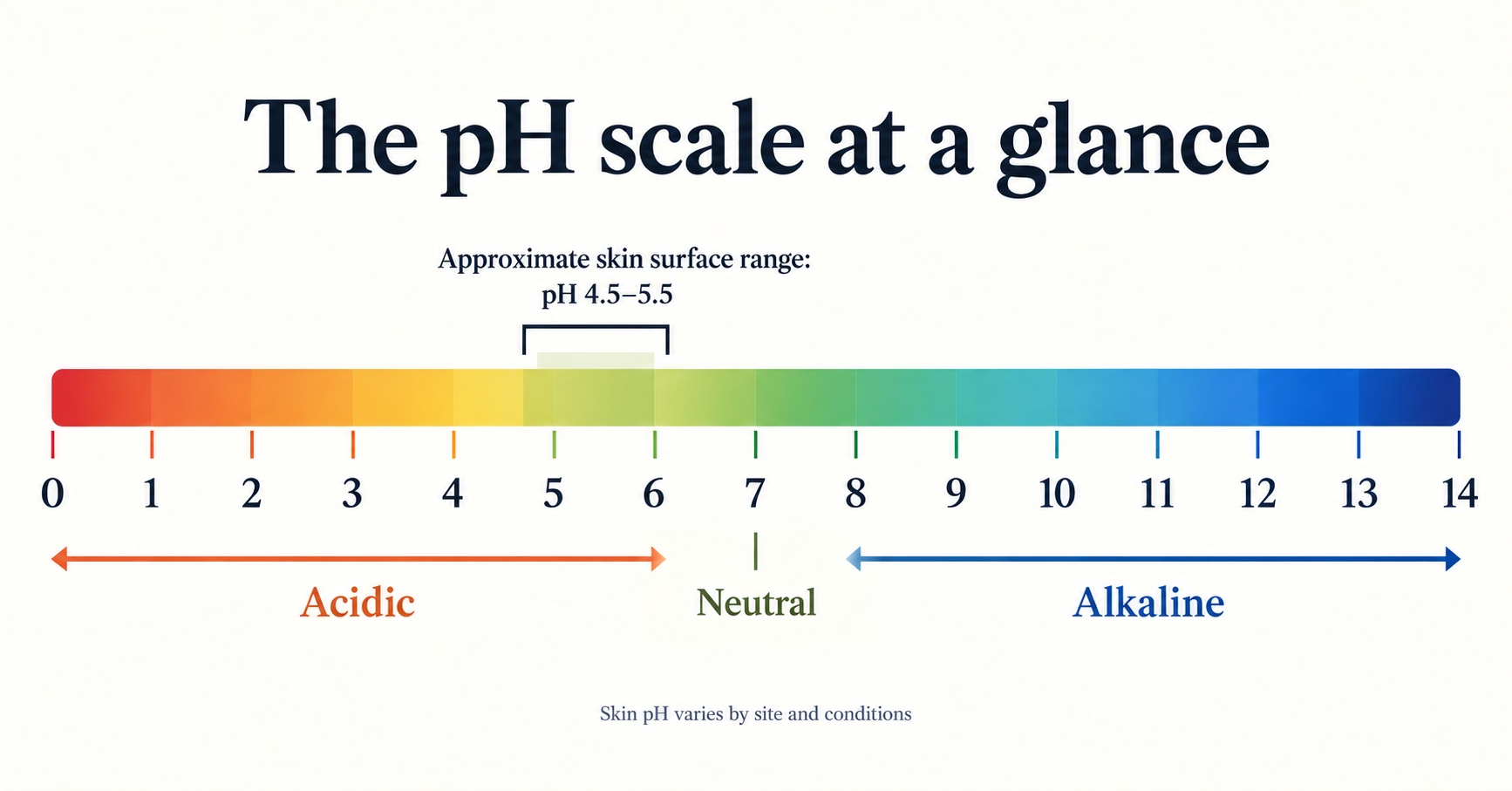
pH describes how acidic or alkaline something is. Healthy skin’s surface is generally mildly acidic, and this environment supports its protective functions. A review describes the outer skin layer’s physiological range as about 4.1–5.8, rather than one exact number for everyone. [1]
A product’s pH is only one part of its formula. Do not treat “pH balanced” as proof that a product cannot irritate you or that it will treat a skin condition.
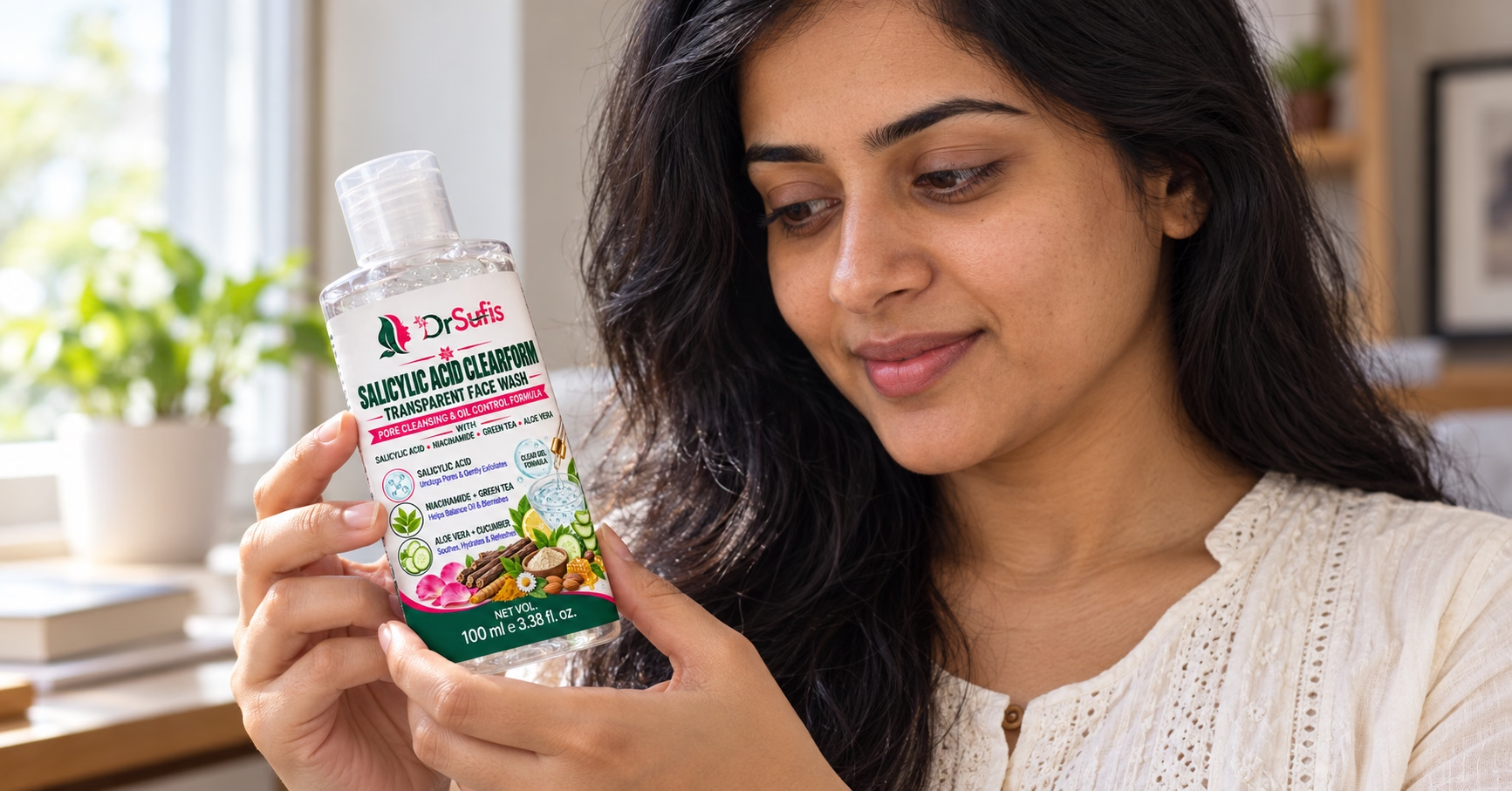
Skin pH explained: what do the numbers mean?
On the familiar pH scale, below 7 is acidic, 7 is neutral, and above 7 is alkaline. For this introductory explanation, the usual scale runs from 0 to 14. Lower numbers indicate greater acidity.
The numbers are not a quality score. A cleanser at pH 5 is not automatically better than every cleanser at pH 6. And a product at pH 3 is not “twice as good” as one at pH 6.
What is a normal skin pH?
Skin is normally mildly acidic. Published descriptions vary with the skin area and measurement conditions. The range of about 4.1–5.8 reported in a review is a useful explanation, not a daily target you must achieve. [1]
A study of skin surface pH found that prior washing and cosmetic use influenced measurements. [8] That helps explain why a single reading should not be treated as your permanent skin identity.
| Term | Simple meaning | What it does not prove |
|---|---|---|
| Acidic | Below pH 7. | That something is automatically gentle. |
| Neutral | pH 7 on the usual scale. | That it matches the skin’s usual surface. |
| Alkaline | Above pH 7. | How one particular finished product will affect you. |
| pH balanced | A label claim that needs context. | Freedom from irritation or a guaranteed result. |
Why does mildly acidic skin matter?
Skin acidity helps support its outer protective layer and the environment for its normal microorganisms. These microorganisms include microbes that naturally live on the skin; healthy care does not mean trying to remove every one. [2]
What is the acid mantle?
“Acid mantle” is a common name for the mildly acidic environment at the skin surface. It should not make you picture an extra sheet that you must coat with acid. The skin’s surface chemistry and structure work together.
DermNet explains that acidity supports processes involved in producing protective fats and keeping the outer layer functioning. [2] This is why pH belongs in a wider discussion of skin barrier care.
Can you feel your pH?
You can feel discomfort, but you cannot identify a pH number from tightness or stinging. Record the sensation and the product involved rather than saying your skin must be “too alkaline.” A symptom may have several possible causes.
What does pH balanced mean on a cleanser?
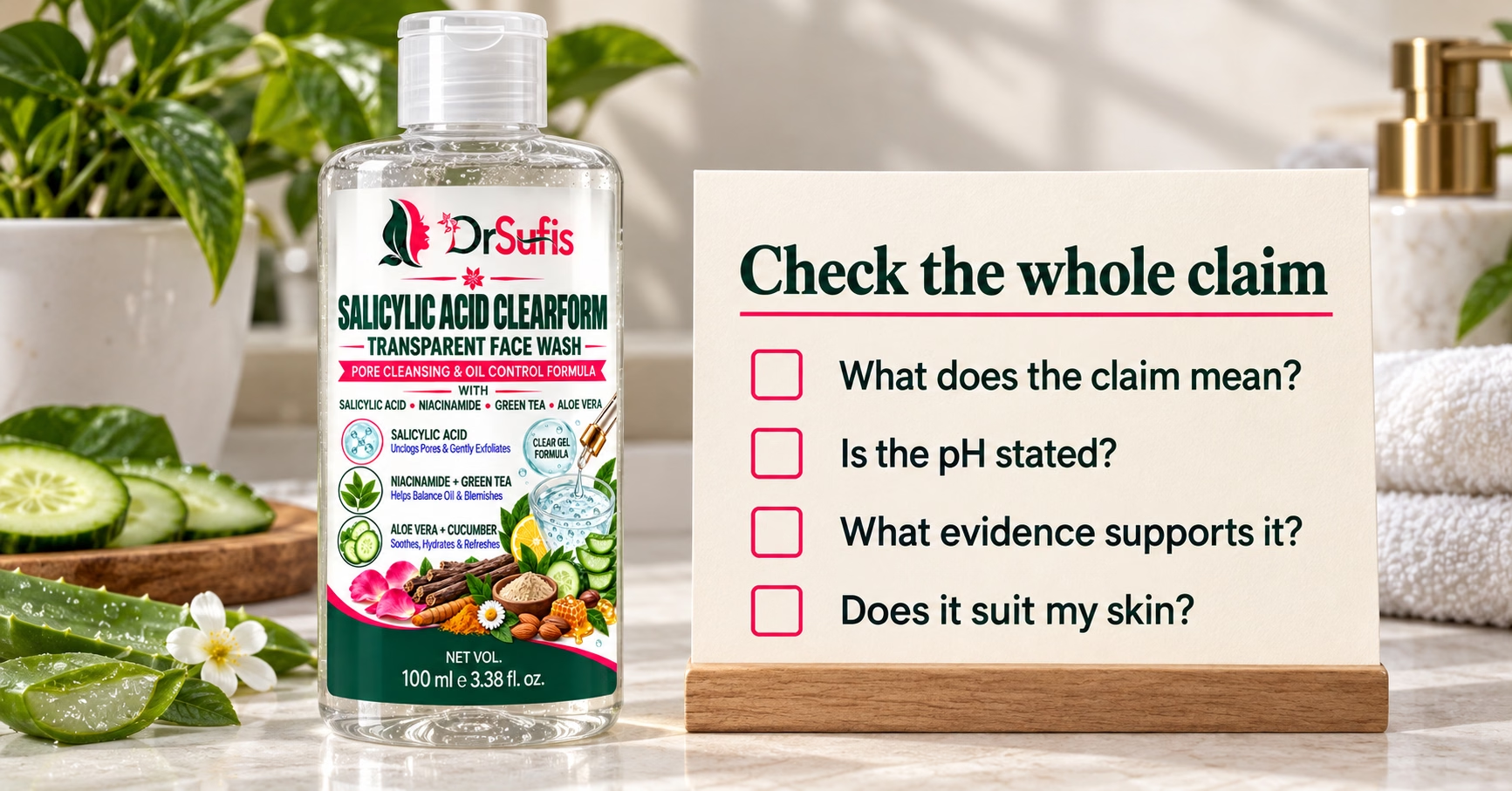
It is a claim to interpret alongside the whole product. Ask whether the manufacturer provides a tested pH or range, what the product is designed for, and how it should be used.
Traditional soaps are generally alkaline. Soap-free synthetic detergent cleansers can be formulated differently. DermNet discusses both pH and cleansing ingredients when explaining why cleansers may irritate. [3] The cleaning system and the rest of the formula matter too.
Do not assume a soap-free product cannot irritate you. Equally, avoid diagnosing a reaction from one number printed on a pack. Notice the finished product’s instructions and your response.
Does lower pH always mean better skin care?
No. Mildly acidic skin does not create a rule that every product should be as acidic as possible. Exfoliating products, for example, have a particular purpose and can irritate if unsuitable or overused. The AAD advises selecting exfoliation carefully and considering the other products in your routine. [4]
Do not try to make a cosmetic “more skin friendly” by adding household acids or alkalis. A home adjustment is not evidence that you have created a safe, stable formula.
“Use pH as one piece of information, not as a shortcut for judging the whole formula or ignoring how your skin responds.”
How should pH knowledge change your routine?
It should encourage thoughtful product choices rather than constant testing. Begin with comfortable cleansing and a clear purpose for each step.
- Review your cleanser. Choose gentle care rather than chasing a squeaky-clean feeling.
- Use lukewarm water and fingertips. Avoid scrubbing, then pat dry with a soft towel. [5]
- Moisturise according to need. For dry skin, gentle fragrance-free products and creams or ointments may be helpful. [6]
- Add changes individually. Keep track of what you introduced and when discomfort appeared.
- Review persistent symptoms. Do not keep adding products simply to correct a guessed pH.
For an Indian audience, note your surroundings and habits. A humid outdoor commute and a day in an air-conditioned room are different contexts. Record what you notice instead of assuming everyone in India needs the same cleanser.
Keep the plan affordable. Before buying a pH-focused toner, ask whether it adds a useful function to your current routine. The label should not make a previously optional step feel compulsory.
A short list helps: product name, purpose, directions, and response. If you cannot explain why you use something, make that your next question. You do not need to replace everything to learn more about your skin.
Should you test skin pH at home?
Do not use a household strip result as a diagnosis or a reason to treat yourself. Skin measurement is not the same as measuring a liquid, and the circumstances of measurement matter. Washing can influence skin surface readings. [8]
If a clinician thinks measurement is relevant, ask what the result means in context. For ordinary shopping, observations about comfort and reactions are more practical than trying to maintain an exact daily reading.
Can you diagnose acne or irritation from pH?
No single pH result establishes those diagnoses. Contact dermatitis, for example, involves irritation or allergy and may need assessment to identify the cause. [7] Do not stop prescribed care because an online test suggests another explanation.
What can you ask the manufacturer?
Try three practical questions: “What is the product intended to do?”, “Do you have a tested pH range?”, and “What directions should I follow if my skin is easily irritated?” Keep the answer with your product notes.
If the reply only repeats “balanced,” ask what that means for this product. Clear information is more useful than a reassuring word. You can decide whether a purchase fits your needs without demanding that every label contain a chemistry lesson.
How should you judge a product claim?
Separate what is measured from what is promised. A tested product pH does not prove that the product treats acne, repairs every barrier problem, or suits every skin type. Those are different claims requiring relevant evidence.
Dr Sufi’s Wellness is Dr Sufia’s personal care brand. This guide does not require a particular purchase. Any recommendation should be based on verified product details and your needs.
When should you seek professional advice?
Seek advice for persistent, recurring, or severe irritation rather than repeatedly changing products. The NHS recommends assessment for these patterns of contact dermatitis symptoms. [7]
Bring your product list and explain what changed. Note any itching, cracking, rash, or discomfort. For prescribed treatments, ask the prescriber how to manage reactions. A “pH balanced” label is not a reason to continue something that repeatedly troubles your skin.
There is no universal timeline for resolving every concern. Ask what improvement to expect and when to review it. Avoid treating a skin symptom as a chemistry puzzle with one missing number.
Frequently asked questions
Does pH 7 mean best for skin?
No. Neutral does not mean ideal for every use. The skin surface is normally mildly acidic. [1] Suitability depends on more than pH.
Must every product be exactly pH 5.5?
No. Treat 5.5 as a commonly mentioned number, not a compulsory target for every product or person. Product purpose and formulation also matter.
Do I need toner after every face wash?
Do not buy one solely to correct an assumed pH problem. Ask what useful role it adds and whether your current cleanser is comfortable.
Does tingling mean an acid product is working?
Do not judge benefit by discomfort. Review the directions and stop a non-prescribed cosmetic that clearly irritates you. Seek advice when symptoms persist.
Can I mix products to balance their pH?
Do not use home mixing as a pH treatment. Follow each product’s instructions; combining numbers does not establish a safe formula.
What if the manufacturer does not list pH?
You can ask for information, but its absence does not tell you whether the product will suit you. Consider the purpose, directions, formula, and response.
Your next step
Review your cleanser’s purpose and directions, then note how your skin feels after use. Let pH inform your questions without allowing one number to replace sensible care or professional advice.
Review the routine stepsReferences and further reading
- Proksch E. pH in nature, humans and skin. Journal of Dermatology, 2018.
- DermNet: Skin barrier function.
- DermNet: Soaps and cleansers.
- American Academy of Dermatology: Safe exfoliation.
- American Academy of Dermatology: Face washing 101.
- American Academy of Dermatology: Dry skin care.
- NHS: Contact dermatitis.
- Lambers H and colleagues. Natural skin surface pH is on average below 5. International Journal of Cosmetic Science, 2006.