A new serum or face wash can feel exciting, especially when it promises to solve a concern you have had for months. But using several new things together makes it harder to understand what helps and what irritates. Learning how to introduce a new product starts with a clear purpose and a manageable plan.
In this guide, I will explain how to read the directions, check tolerance on a small area, and observe your response. The aim is thoughtful everyday care, not a promise that any home test can guarantee safety.
Choose one new skin care product, read its directions, check suitability, and test a small area when appropriate before wider use. Keep other optional changes separate so reactions are easier to trace. Stop a cosmetic that causes a reaction rather than adding more products to cover it up.
The AAD recommends small-area testing before adding skin care products. This can help identify reactions, but it does not replace professional allergy testing or prove future tolerance. [1] [2]
How to introduce a new product with a clear purpose
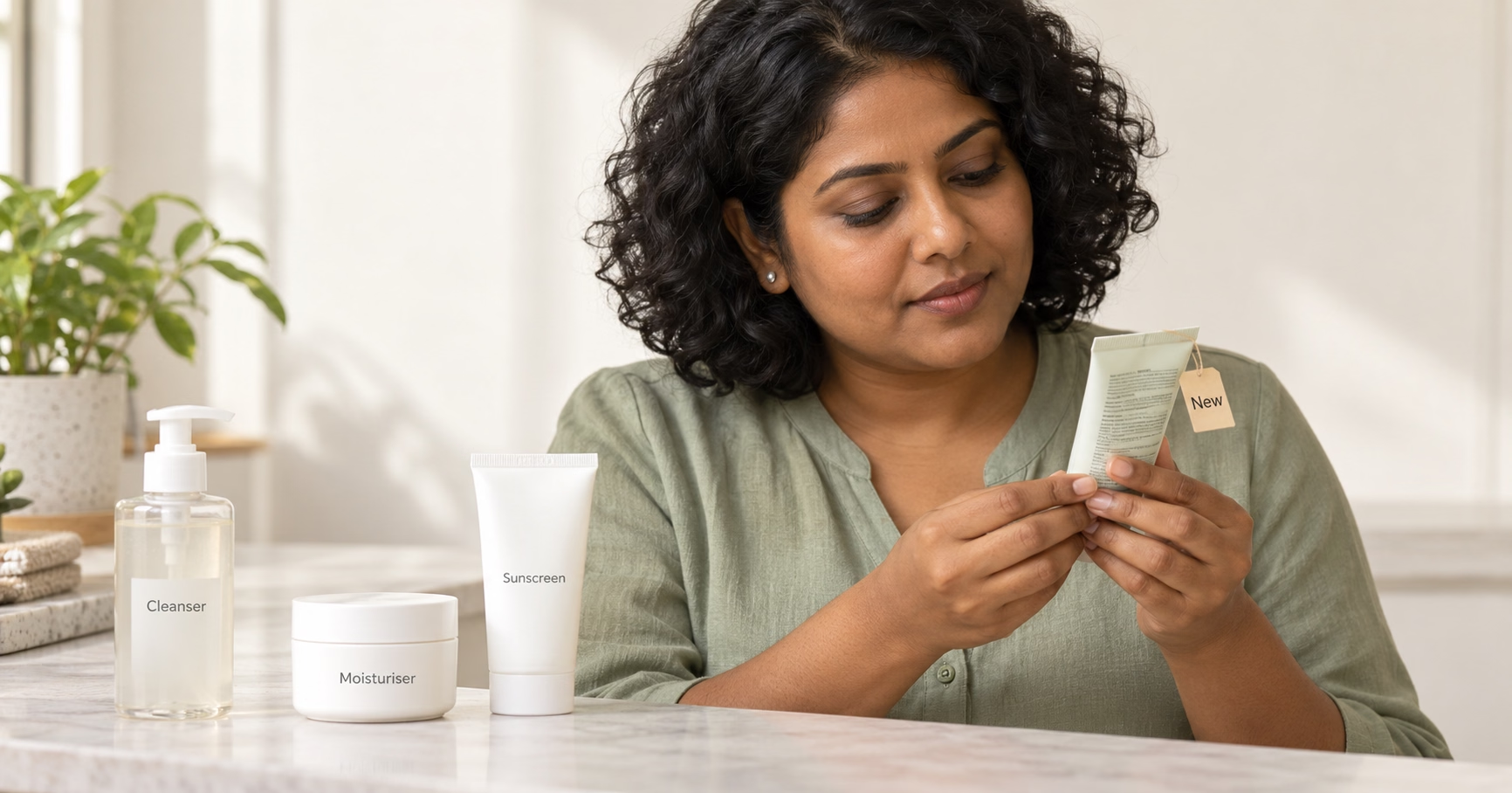
First decide what you want the product to do. “I want my cleanser to feel comfortable” is a clearer goal than “I want perfect skin.” A clear goal also helps you decide whether another step is necessary.
The AAD recommends a basic foundation of cleansing, moisturising, and sun protection. Using more products can increase cost and irritation. [3] A toner, serum, or mask should add a useful role rather than duplicate something you already use.
What should you check on the label?
- Where it belongs: face, body, lips, or another specified area.
- How it is used: leave-on or rinse-off, amount, frequency, and contact time.
- Warnings: areas to avoid, precautions, and any sun-protection instructions.
- Product condition: expiry information, packaging integrity, and storage directions.
If the directions are unclear, ask the manufacturer before experimenting. A friend’s routine or a video demonstration should not override the product’s instructions.
When is individual advice useful before starting?
Ask first if you are treating a skin disorder, using prescribed products, have a history of troublesome reactions, or are considering a treatment during pregnancy or breastfeeding. Product-specific guidance is more useful than assuming everything sold as skin care has the same precautions.
Do not add a product over an active rash simply because it is labelled soothing. A persistent concern may need assessment before more cosmetics.
How does testing a small area help?
It gives you a chance to notice a reaction before applying a product more widely. It is a tolerance check, not a guarantee.
For ordinary products suitable for this approach, the AAD describes using a small spot on the underside of the arm or elbow area twice daily for seven to ten days, with the normal amount and thickness. Leave-on products stay on as intended; rinse-off products should follow their stated contact time. [1]
Do not apply that schedule automatically to a strong exfoliant, peel, prescription treatment, or product with different instructions. Ask for product-specific advice rather than increasing exposure to fit a general testing rule.
Use intact skin. Do not cover the test area tightly or change the formula unless specifically instructed. You are checking the finished product in its intended use, not testing an improvised mixture.

Is this the same as medical patch testing?
No. Medical patch testing investigates contact allergy using selected substances and a professional assessment. It is different from trying your own cosmetic on a small area. DermNet explains that patch testing is used for allergic contact dermatitis, not as a general test for every kind of irritation. [2]
A clear home result does not prove that the same product will feel comfortable on every body area or that it can never cause a reaction later. Continue observing when you begin normal use.
“Give each new product a clear purpose and introduce changes separately. That makes your skin’s response easier to understand.”
Introduce the product in a manageable order
After an appropriate tolerance check, follow the product’s directions for normal use. There is no universal starting frequency for every cleanser, moisturiser, sunscreen, or active treatment.
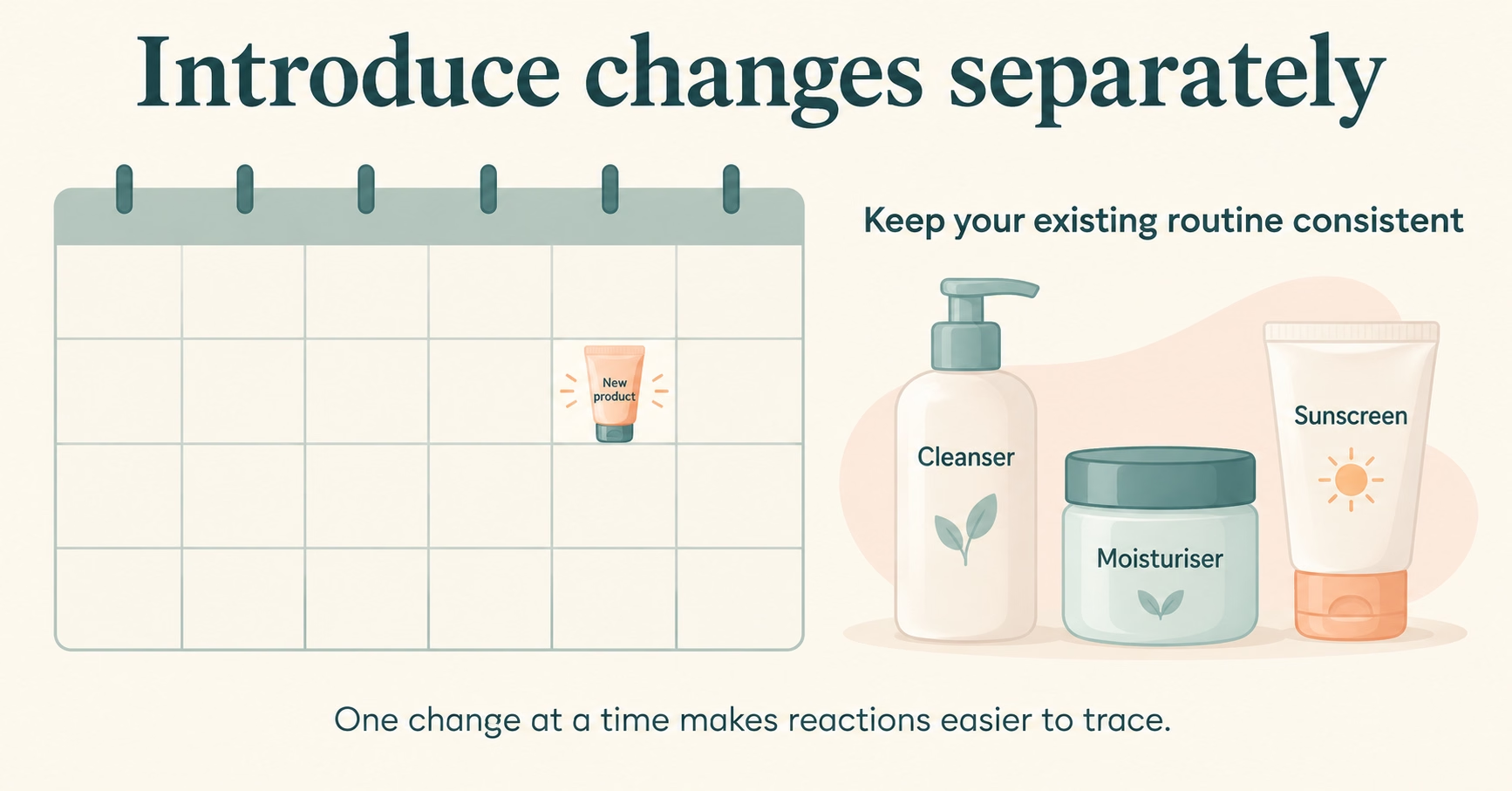
- Keep existing care consistent where suitable. Avoid adding several optional products at the same time.
- Use the instructed amount and area. More is not automatically better.
- Follow the appropriate frequency. If an active product needs a gradual start, use its instructions or a clinician’s plan.
- Record what happened. Note when you started and any discomfort or useful change.
- Review before adding another optional step. Make sure you can explain the first product’s role and response.
Do not stop necessary sun protection or prescribed treatment simply to keep a perfectly unchanged routine. Ask for guidance if replacing an essential step or managing a treatment plan.
Keep a useful record without overchecking
A short phone note is enough. Write the product name, start date, amount or frequency used, and what you noticed. You do not need a complicated tracker or repeated close-up photographs.
An example entry could read: “Started the new moisturiser after testing; used as directed; no discomfort today.” Another might say: “Cheeks itchy after use; stopped the cosmetic.” These are sample notes, not patient histories or proof of a diagnosis.
Record unusual circumstances too, such as introducing makeup or changing another product. Keep the focus on useful information, not on finding a reason to continue something that troubles you.
How long should you wait between new products?
There is no single interval that fits every product and goal. Small-area testing and judging effectiveness are different tasks. Ask what results to expect and when to review them instead of adopting one timetable for all skin care.
For an Indian reader, choose a plan that fits daily life and budget. Note changes in travel, work surroundings, or other products so you do not blame one cosmetic without context.
What should you watch for after starting?
Pay attention to comfort as well as the result you hoped for. Contact dermatitis can cause itching, dryness, cracking, or blisters. On darker skin, colour changes may look brown, purple, or grey rather than bright red. [4]
| Observation | Useful response |
|---|---|
| No discomfort | Continue within directions and monitor the intended goal. |
| Itching, swelling, or a rash | Stop the cosmetic, gently remove it, and seek advice when needed. [1] |
| Unclear results | Review the goal and expected timeline before adding another product. |
| Persistent or severe symptoms | Seek assessment rather than continuing experiments. [4] |
Do not automatically call new spots “purging” or burning “proof it works.” Record the symptoms and consider whether the product is appropriate. A reaction should not become a reason to ignore your skin.

Common mistakes that make reactions harder to trace
Changing too much at once removes useful clues. Keep your plan simple enough to understand.
- Starting an entire range together: you may not know which product caused a change.
- Adding several exfoliating steps: the AAD advises considering existing products because combinations can increase irritation. [5]
- Copying someone else’s amount or frequency: use your product’s directions.
- Trying to cover discomfort with another serum: review the reaction first.
- Expecting instant results: check the product’s purpose and review plan.
Before another purchase, ask whether it solves a different need. You can keep a routine affordable by avoiding overlapping steps.
Dr Sufi’s Wellness is Dr Sufia’s personal care brand. This guide recommends a method of introducing products, not a particular purchase. Any product advice should match verified details and your needs.
When should you seek medical help?
Seek advice for persistent, recurrent, or severe reactions. A clinician may need to identify an irritant, allergy, or another concern. [4] Take the product packaging and describe what you used and when symptoms began.
Breathing difficulty, sudden swelling of the lips, tongue, or throat, or collapse can signal a severe allergic reaction. Seek emergency medical help immediately. [6] Do not wait for a cosmetic reaction to settle on its own.
If the product is prescribed, contact your prescriber about symptoms and the treatment plan. Do not restart a product that caused a serious reaction simply to confirm your suspicion.
Frequently asked questions
Does a home test guarantee no allergy?
No. It can help reveal a reaction but cannot guarantee future tolerance or replace professional allergy assessment.
Should I introduce all products from one brand together?
No. A shared brand name does not tell you which product caused a response. Introduce optional changes separately.
Must every product start twice a week?
No. Different products have different purposes and directions. Do not apply one starting schedule to your entire routine.
Can I start a new product before an important event?
Allow time for appropriate testing and observation rather than rushing an optional change. Do not shorten directions to fit the event.
What if I already started three products?
Record all three and the timing. If symptoms appear, stop experimenting and seek advice rather than guessing which ingredient is responsible.
Can a product suit my arm but not my face?
Yes, a small-area result does not establish comfort everywhere. Continue observing when using it in the intended area.
Your next step
Choose one clear goal, read the directions, and plan an appropriate tolerance check. Introduce changes separately and watch both comfort and results. Get help when a reaction needs assessment.
Review small-area testing