You have used a new cream for a week, but the mirror looks the same. Should you continue or buy something else? Knowing how long to try a skincare product helps you avoid giving up too early—or continuing when your skin is clearly unhappy. I’ll help you separate three questions: does it feel comfortable, is it useful in your routine, and is it improving the concern you bought it for?
There is no single trial period for all skincare. Assess comfort from the first use and keep watching. Acne treatment may need six to eight weeks before improvement becomes noticeable, with a treatment review around twelve weeks. Some cosmetic changes need several weeks or months. Follow the product’s directions and your clinician’s plan; do not wait through a concerning reaction.[1] [2]

How long to try a skincare product before judging it?
Judge a product according to its purpose, not a fixed “thirty-day rule.” A cleanser, sunscreen and acne treatment have different jobs. A comfortable texture is also different from a lasting change in acne, dark marks or fine lines.
Comfort: assess it early and throughout use
You can notice whether something feels greasy, sticky or drying quite early. These observations help you decide whether it fits your daily routine. However, one comfortable application does not guarantee that later applications will suit you.
Benefits: allow the relevant time
A moisturiser may make skin feel softer before a treatment changes a visible concern. In its guidance on anti-ageing products, the American Academy of Dermatology notes that many products need at least six weeks, sometimes up to three months. This is general guidance, not proof that every serum will work by that date.[2]
Start by asking, “What exactly am I trying to improve?” Less tightness after washing is a clearer goal than “perfect skin.” Fewer new pimples is more useful to track than expecting every old mark to disappear.
Different products need different expectations
Use these ranges as context for a review, not deadlines or guarantees. A finished product’s formula, your concern and the way you use it all matter.
| Product or goal | Useful timing | What to judge |
|---|---|---|
| Gentle cleanser | Assess cleansing and comfort from early uses. | Does it remove what you need without leaving uncomfortable tightness? It is not automatically an acne treatment. |
| Moisturiser | Comfort may be noticeable early; keep checking during ordinary use. | Does skin feel less dry, and does the texture fit your routine? Temporary softness does not prove wrinkle repair. |
| Sunscreen | Judge usability early; protection depends on correct use each time. | Check labelled protection and application instructions. Visible brightening is not a test of UV protection.[3] |
| Acne treatment | Improvement can take six to eight weeks; treatment is commonly reviewed at twelve weeks.[1] | Track new spots and follow the prescribed plan. Seek advice earlier for worsening, pain or scarring. |
| Fine-line cosmetics | Many need at least six weeks; some need up to three months.[2] | Look for realistic changes. Creams cannot correct every sign of ageing. |
| Dark marks | Fading may take months; there is no universal serum deadline. | Some marks naturally fade over six to twelve months after their cause is stopped. This is not a product trial instruction.[4] |
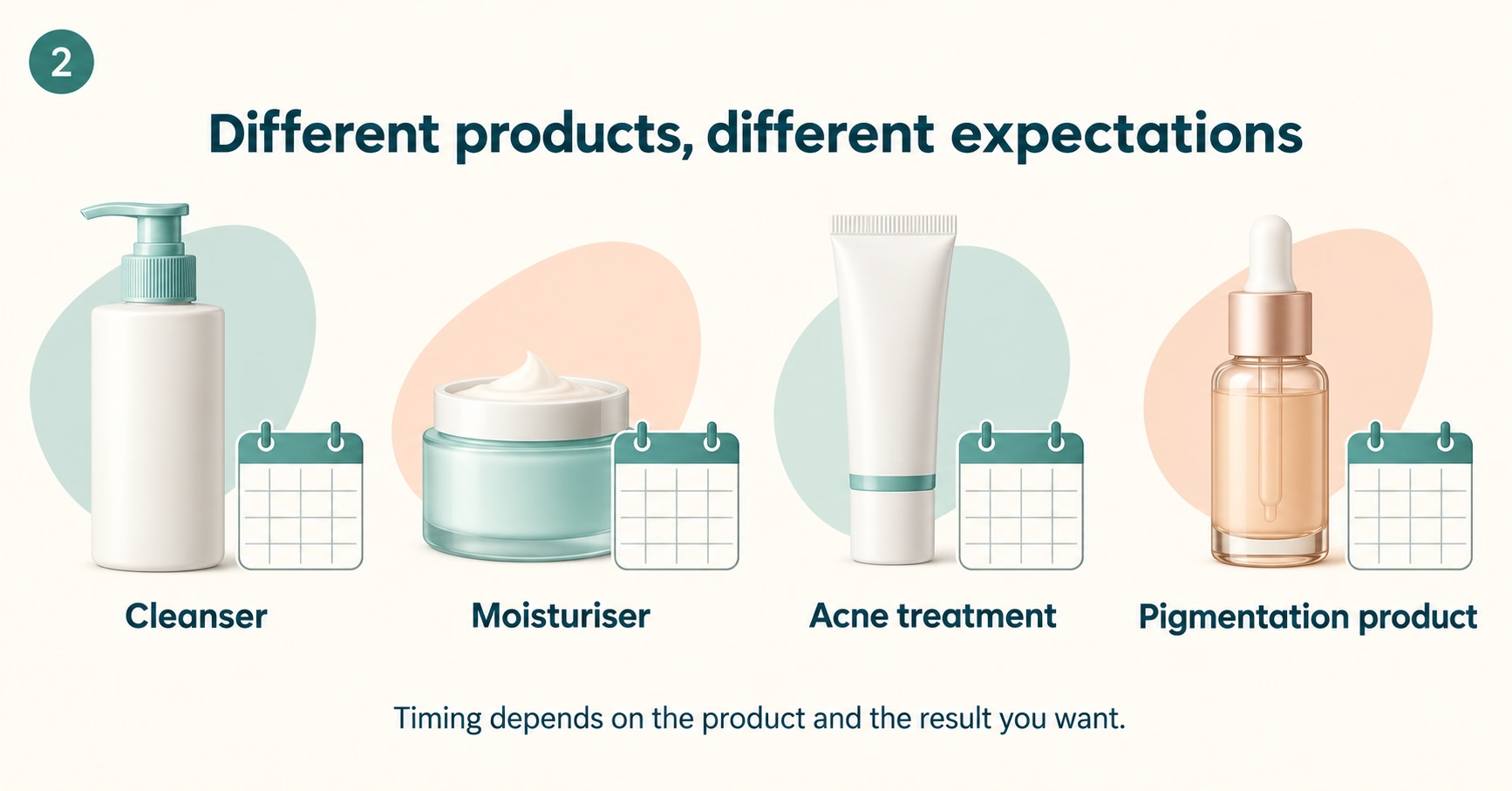
For pigmentation, finding the cause matters. Marks after pimples and other pigmentation conditions are not identical. Continuing a random brightening cream for months may miss the problem that needs attention.
Research on an ingredient also does not prove every product containing it delivers the same results. Ask whether a claim describes the ingredient, the actual formula, or only a temporary cosmetic effect.
“Give a suitable product a fair chance, but judge it by a clear goal—not by the hope that more time will fix every problem.”
How can you judge a product fairly?
A fair trial means using a suitable product as directed and comparing the same concern over time. It does not mean applying extra or building a complicated routine.
- Choose one goal. For example, aim for less cheek tightness or fewer new pimples. Do not expect one product to solve every concern.
- Record your starting point. Take a simple photo and note what bothers you. Avoid beauty filters.
- Introduce one change. Keep the rest of your routine steady where practical. Follow any clinician-directed combination rather than separating prescribed treatments yourself.
- Read the directions. Use the recommended amount and frequency. A home tolerance check, where appropriate, addresses possible reactions; it does not establish effectiveness.
- Review consistently. Compare photos in similar light, at the same angle and without makeup. A weekly check is a practical tracking habit, not a medical test.
- Set a review point. Use the relevant guidance or agreed treatment plan. Review earlier if your skin becomes uncomfortable or the condition worsens.
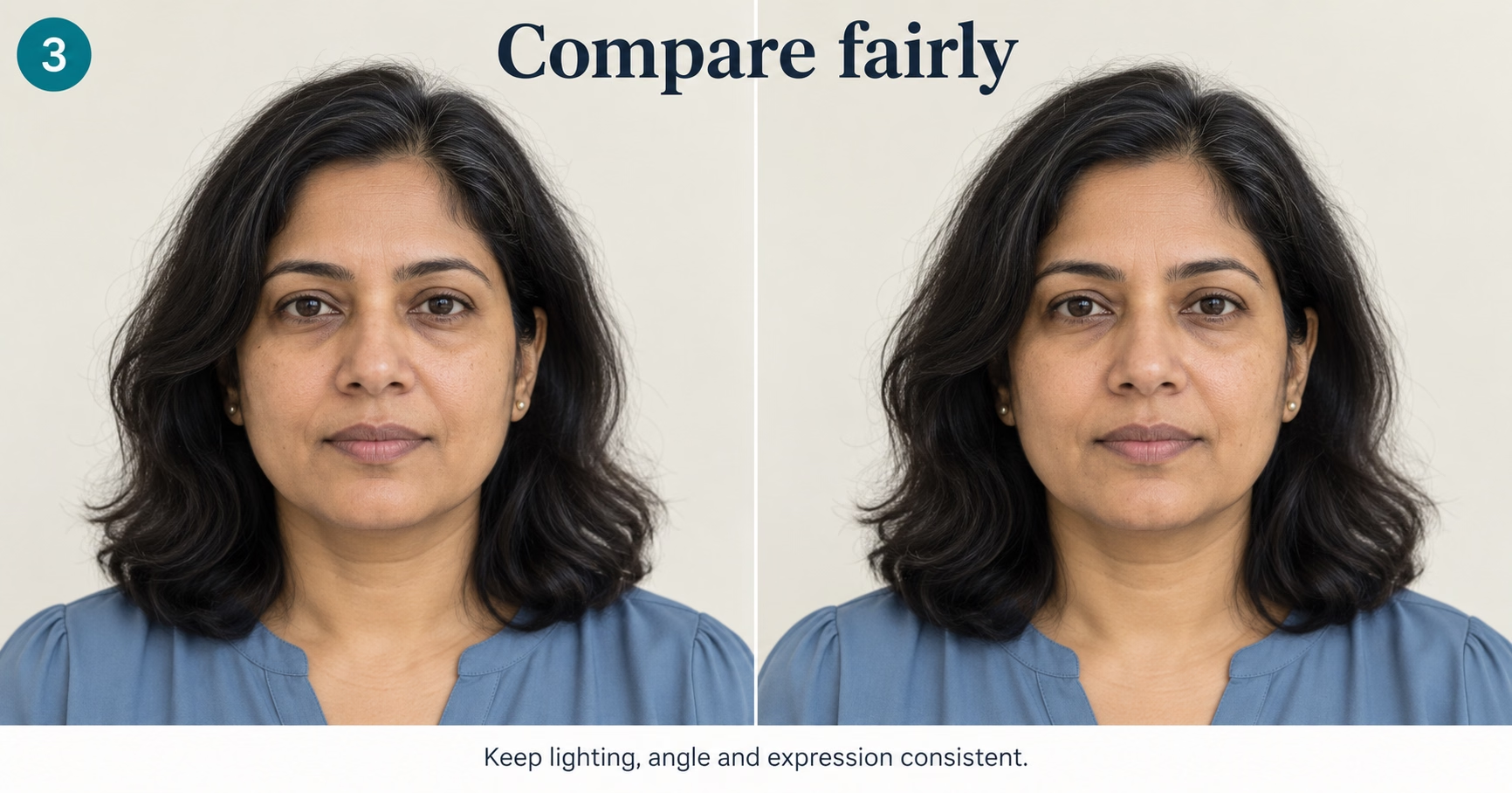
Look at the overall pattern rather than one good or bad morning. For acne, count new spots separately from old marks. For dryness, notice whether discomfort between applications is improving, not only how smooth skin feels immediately afterwards.
Also record practical changes. A humid commute, more time in an air-conditioned room or a change in your routine can affect your observations. India has varied climates; a texture that feels convenient in one setting may feel less comfortable in another.
Common mistakes that confuse the result
Changing too much at once makes it difficult to understand what is helping. The American Academy of Dermatology warns that switching acne treatments too often can irritate skin and contribute to breakouts.[5]
- Using more to get faster results. Extra applications do not create a fairer trial. Stay within instructions.
- Judging only a “glow.” Lighting, makeup and surface moisture can change how skin looks. Track your actual goal.
- Calling every breakout “purging.” Do not automatically treat worsening as evidence that a product is working. Ask for advice when the pattern is concerning.
- Waiting because the bottle was expensive. Money already spent is not a reason to ignore a reaction.
- Copying someone else’s deadline. Another person’s result does not establish your diagnosis or predict your response.
For a limited budget, prioritise products with a clear purpose. You do not need to add a toner, serum and mask simply to make the routine look complete. Avoid buying backups before you know whether the product fits your needs.
Should you continue, review or stop?
Continue a comfortable, suitable product as directed while giving the intended benefit time. Review a disappointing result when the relevant trial period has passed. Stop and get advice when a concerning reaction appears.
- Comfortable and improving? Continue within directions and review whether the benefit is worth the cost.
- Comfortable but no clear benefit? Check the goal, consistent use and expected timing. At the review point, consider advice instead of adding more products.
- Burning, rash, swelling or worsening discomfort? Pause the suspected cosmetic and seek advice when needed. For prescribed treatment, contact the prescriber about side effects.
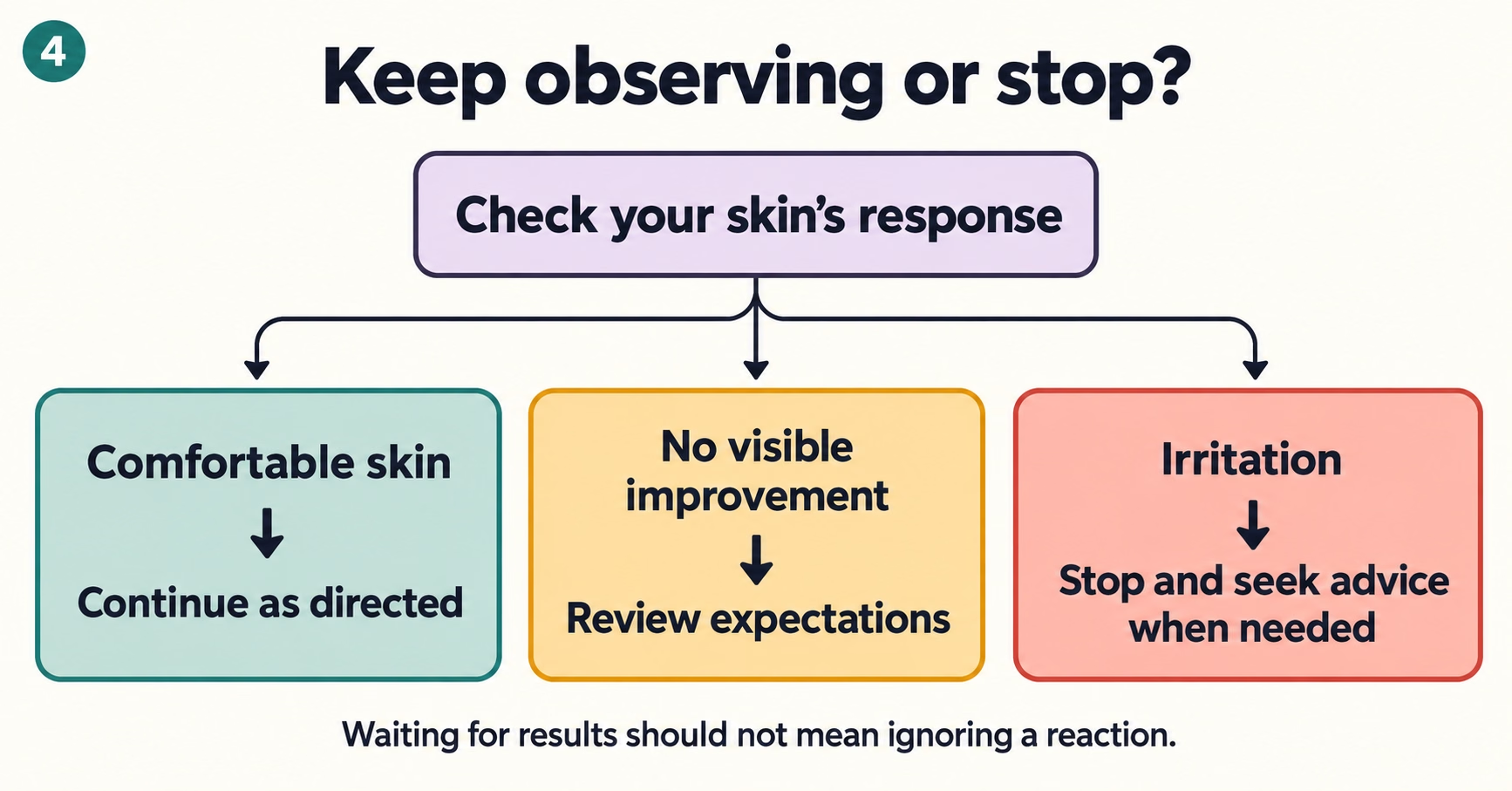
Do not use burning as a measure of effectiveness. Irritation can also contribute to dark marks, particularly in darker skin tones.[4] Persistent symptoms deserve assessment.
Deep, painful pimples, developing scars or acne affecting your wellbeing are reasons to seek medical help earlier, rather than finishing a self-chosen trial.[6]
Sudden lip, tongue or throat swelling, trouble breathing or collapse needs emergency medical help. Do not wait to see whether the product settles.[7]
Frequently asked questions
Should I finish the bottle before deciding?
No. Bottle size is not a treatment timeline. Use the product’s purpose, your response and the relevant review point. Do not finish a product that causes a concerning reaction.
Does a higher price mean faster results?
A price tag is not evidence of a faster result. Look for clear directions and realistic claims. Choose something you can use consistently within your budget.
What if I miss a few applications?
Follow the label or prescriber’s missed-dose advice. Do not double the amount to catch up. Note the missed applications when reviewing how consistently you used it.
Can I stop once my skin improves?
That depends on the product and condition. Some benefits need continued care. For prescribed treatment, follow the agreed plan rather than stopping or extending it yourself.
Can my sunscreen be working without visible results?
Yes. Its purpose includes protection, not an immediate visible transformation. Follow the labelled directions and use shade and clothing too; appearance alone cannot measure protection.
Should I keep trying if there is no improvement?
Not indefinitely. Review whether the product suits the concern and was used correctly. Seek assessment when the appropriate trial has not helped instead of repeatedly buying similar products.
Can I judge a serum from its first application?
You can assess its feel, but that does not establish a lasting benefit. Separate immediate texture or softness from the longer-term goal you want to evaluate.
Start with one goal and a sensible review
Choose a clear concern, keep the routine manageable and set an appropriate review point. Give comfortable skincare time, pay attention to changes and get help when needed. A useful routine should fit your skin, everyday life and budget.
Dr Sufi’s Wellness is the author’s brand. This article offers general skincare education and does not replace an individual diagnosis or treatment plan.
References and further reading
- NICE: Acne vulgaris—management recommendations
- American Academy of Dermatology: Maximising results from anti-ageing skincare
- American Academy of Dermatology: How to apply sunscreen
- American Academy of Dermatology: Fading dark spots in darker skin tones
- American Academy of Dermatology: Acne management tips
- NHS: Acne
- NHS: Anaphylaxis