A new moisturiser may look perfect on the shelf, yet leave your skin itchy after use. Home patch testing is a simple way to check how a small area of skin responds before introducing a cosmetic more widely. It can help you notice a problem early, but it cannot promise that the product will suit your face. Understanding what this check can—and cannot—tell you helps you make a calmer skincare decision.
A home cosmetic check means applying a product to a small area of healthy skin and watching for a reaction. Medical patch testing is different: a clinician uses selected substances to investigate contact allergy. A clear home check is useful information, not an allergy diagnosis or a guarantee of safety.
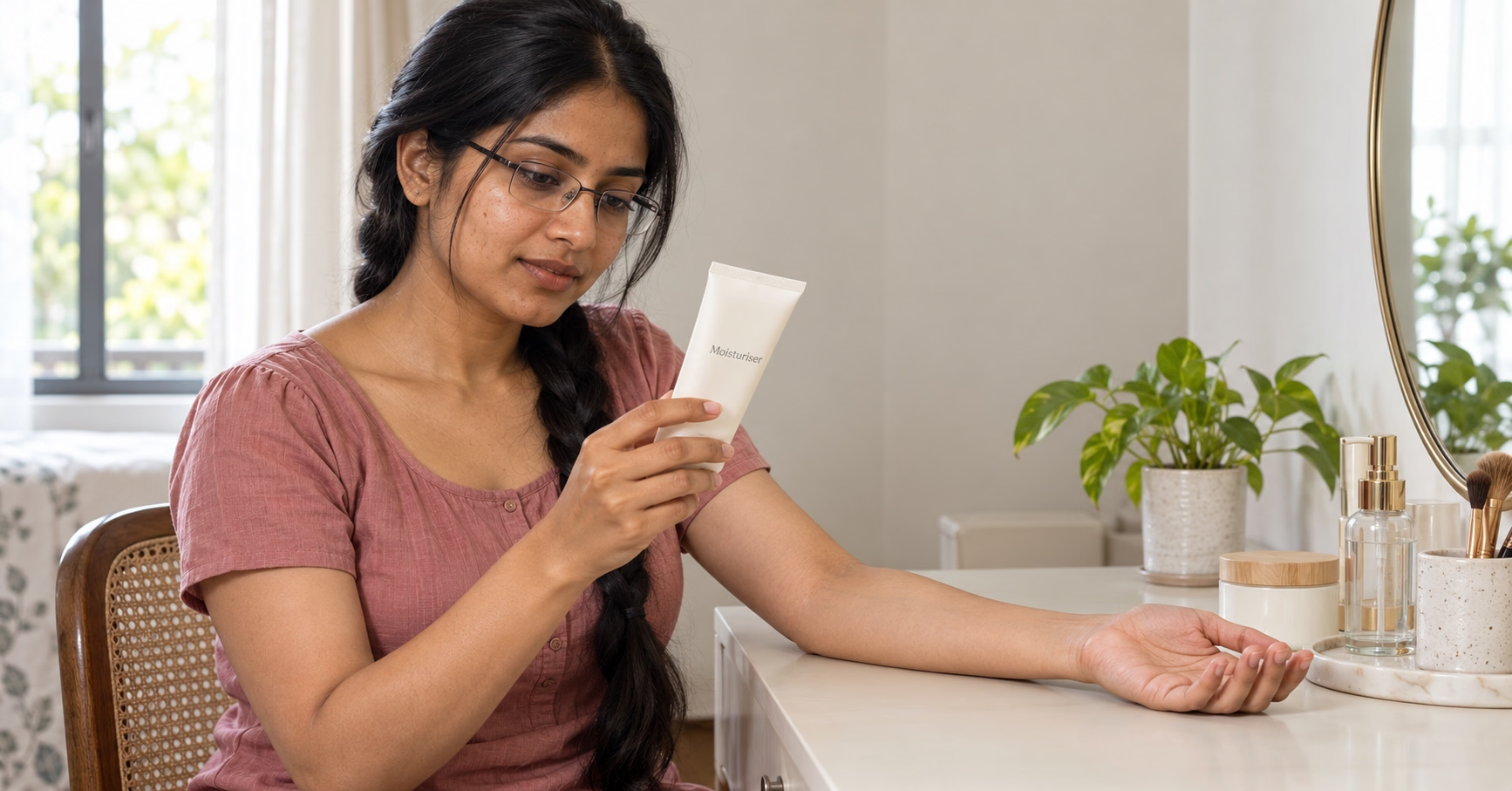
What is home patch testing used for?
In everyday skincare, people use “patch test” to mean trying a cosmetic on a small area first. Here, we call this a small-area tolerance check. “Tolerance” simply means how comfortably your skin handles the product.
Repeated open application testing is one recognised way of checking certain products. “Open” means the product is not sealed beneath a patch. This approach can help investigate a delayed skin reaction, sometimes under a clinician’s guidance.[2]
For a shopper, the practical benefit is straightforward: you have a chance to notice discomfort before applying a new cream across your whole face. It also makes the cause easier to track when you introduce only one new product.
However, a home check does not identify which ingredient caused trouble. A fragrance, preservative or another ingredient may be involved, but the packaging alone cannot establish the cause.
Check the product before checking your skin
Read whether it is meant to stay on or be washed off. Check its intended body area, expiry information and storage instructions. If the label is unclear, ask the manufacturer before using it. A product intended for the body is not automatically suitable for eyelids or lips.
For an Indian routine, consider what you already use: face wash, sunscreen, makeup, hair products and any prescribed creams. Adding a new serum alongside a new cleanser makes it harder to understand a reaction.
How to do a home check for a suitable cosmetic
This general approach is for ordinary skincare products suitable for a home check. The product’s directions and your clinician’s advice take priority. Strong peels, hair dyes and prescribed treatments need their own precautions; this guide is not a substitute for those instructions.
- Choose healthy skin. Use a small area on the underside of your arm or near the elbow bend. Avoid a rash, wound, sunburn or freshly irritated skin.
- Apply the usual amount. Use the normal thickness over a small spot. Do not apply extra to make the test “stronger,” and do not cover it with tape.
- Follow the contact time. Leave a leave-on product as directed. Wash off a cleanser according to its label; do not leave it overnight.
- Repeat only as appropriate. For suitable products, the American Academy of Dermatology suggests a small-area check twice daily for seven to ten days. This is not a universal schedule for every active ingredient.[1]
- Watch for a change. Look for itching, burning, swelling, bumps or a new rough patch. Stop if a reaction appears; do not continue to complete the schedule.
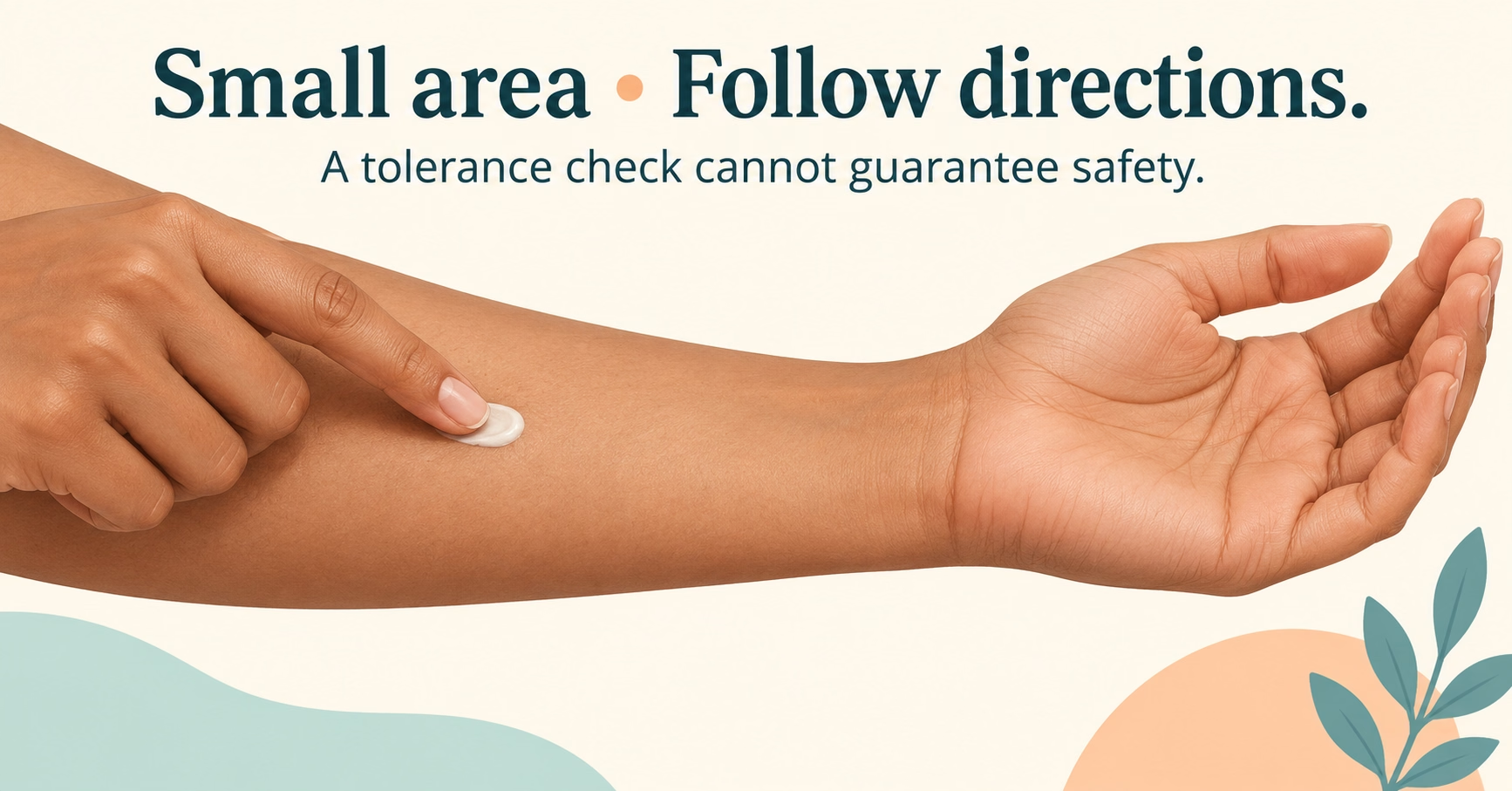
Keep the rest of your routine steady while checking. A quick phone photo can help you compare the area, especially if the change is subtle. Record the product name and when you applied it. You do not need a complicated skincare diary.
If there is no reaction, introduce the product gradually within its directions. Avoid changing several products on the same day. This is a cautious next step, not proof that every future application will be comfortable.
“A small-area check gives you a clue. Listen to your skin, and do not treat a clear result as permission to ignore discomfort.”
What home patch testing cannot tell you
A negative result means you did not notice a reaction under those particular conditions. It does not mean that you can never react to the product. The skin on your arm and the skin around your eyes may respond differently.[2]
- It cannot guarantee facial comfort. A product that seems comfortable on the arm may still sting elsewhere.
- It cannot predict every breakout. A small-area check is not a reliable “acne-safe” certificate.
- It cannot prove results. No rash does not show that a cream will remove pigmentation or improve wrinkles.
- It cannot approve combinations. Tolerating one product does not establish that layering it with several actives will be comfortable.
- It cannot rule out every allergy. A delayed or exposure-dependent reaction may not appear during your check.
Think of the result as one piece of information. Your usual routine, how often you apply the product and where you apply it also matter. More exfoliation is not always better; combining exfoliating products with some treatments can increase irritation.[6]
Home checks and medical patch testing: the difference
Medical patch testing investigates allergic contact dermatitis—an itchy skin reaction caused by contact with a substance your immune system reacts to. A clinician chooses allergens, uses appropriate preparations and interprets the results. It is different from skin-prick testing for immediate allergies.[3]
| Question | Home cosmetic check | Medical patch testing |
|---|---|---|
| What is checked? | A suitable finished cosmetic. | Selected allergens chosen by a clinician. |
| Who assesses it? | You observe how your skin responds. | A trained clinician reads and interprets reactions. |
| What can it show? | A possible problem with that product under the conditions used. | Evidence of a contact allergy, interpreted with your history. |
| What is the limit? | It does not diagnose the cause or guarantee future tolerance. | It does not explain every rash or test every possible substance. |
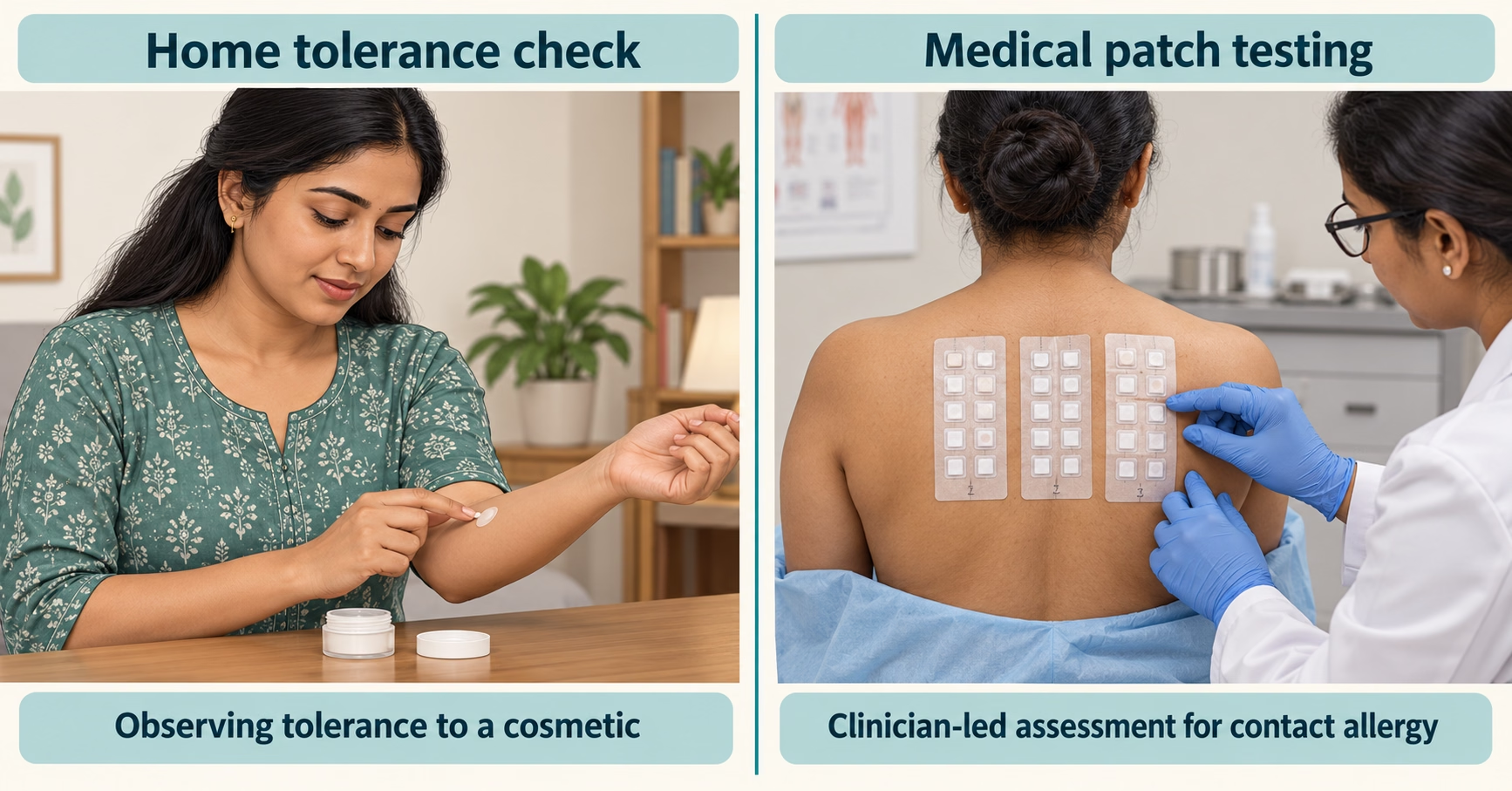
Bring the actual products, packaging, ingredient lists and photos of previous reactions to your appointment. Tell the clinician about medicines and treatments you use. Do not stop prescribed medicines on your own to prepare for testing.
When should you stop or get medical help?
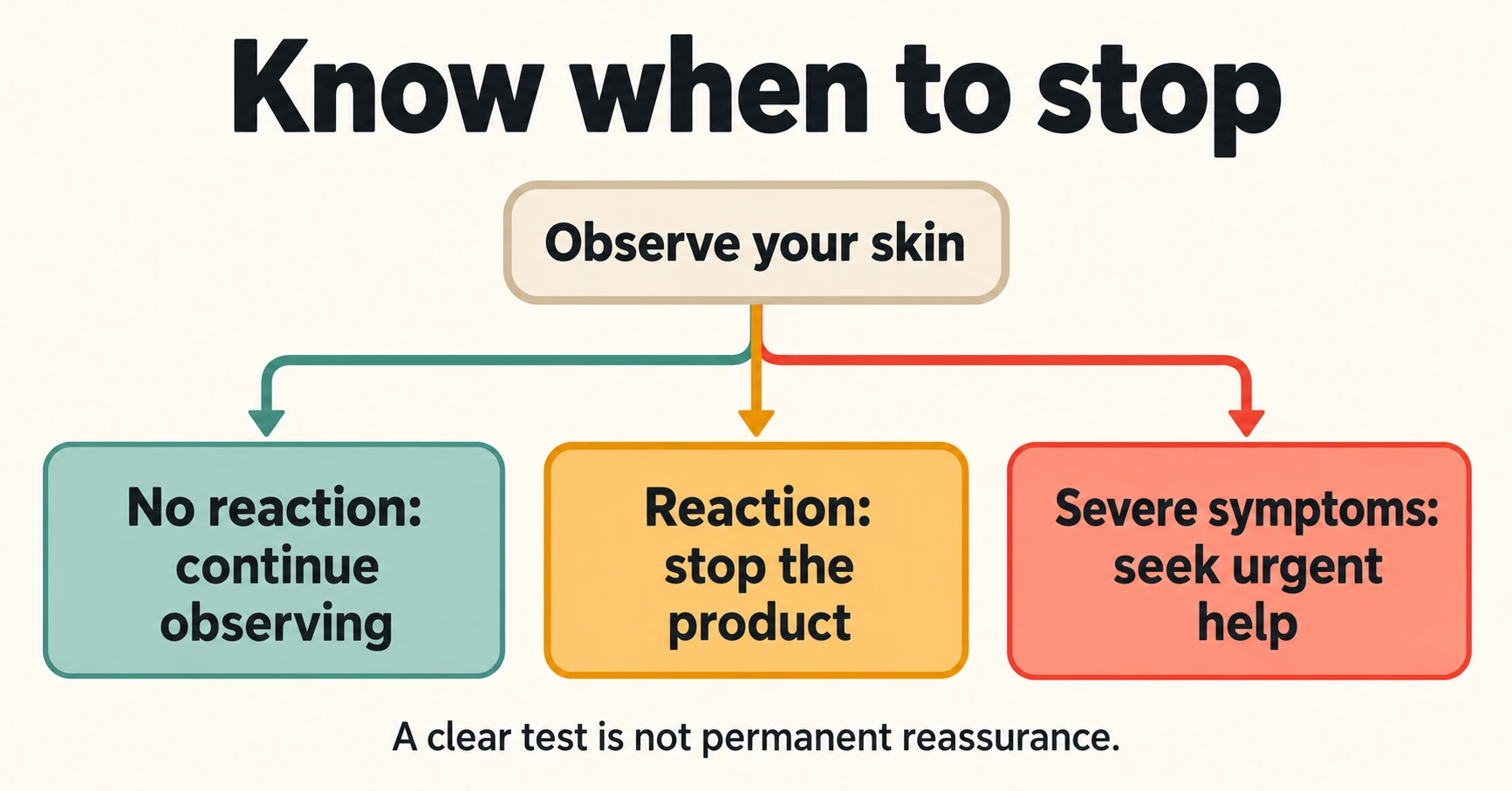
Stop using the product if the area becomes itchy, sore, swollen or develops a rash. Gently wash it off. Avoid applying more of the same product to “see whether the skin gets used to it.”
Skin changes are not always bright red. On darker skin, inflammation may look brown, purple or grey, and itching or texture changes may be easier to notice. Seek medical advice for a persistent, recurring or severe reaction.[4]
Difficulty breathing, swelling of the lips, tongue or throat, or collapse needs urgent medical attention. Do not wait for a skincare consultation or continue testing.[5]
When a home check is the wrong starting point
Do not deliberately retry a product that caused a severe reaction or contains an ingredient you know you are allergic to. Ask a clinician first. Avoid testing household cleaners or other known irritants on your skin.[2]
If your skin is already inflamed, first get advice about the existing problem. A new cosmetic may add confusion. You do not need to prove you can tolerate a product just because you have bought it.
Frequently asked questions
Is an overnight home patch test enough?
Not necessarily. Some reactions take longer to appear. Use a suitable repeated check and follow the product’s instructions rather than treating one clear morning as a guarantee.
Should I cover the product with a plaster?
Not for the open cosmetic check described here. Covering changes the exposure. Medical patches use specific preparations and supervision; copying that method with a full-strength cosmetic can cause trouble.
Can I check a cleanser this way?
A suitable rinse-off product can be checked using its normal directions. Rinse it off as instructed. Leaving a cleanser on for longer does not make the result more useful.
Does burning mean the product is working?
Burning is not proof of benefit. Stop if a product causes a concerning reaction. Check its directions and seek advice if symptoms persist instead of pushing through discomfort.
Can I test several new products together?
One at a time is easier to interpret. If you combine several products and develop a rash, it becomes difficult to identify which product—or combination—was involved.
Can a home check tell me which ingredient I am allergic to?
No. It checks a finished product, not individual ingredients. A dermatologist can assess recurring reactions and decide whether medical patch testing would help.
Do I still need to watch my skin after a clear result?
Yes. Continue observing when you introduce the product into your routine. Stop if new symptoms appear. A clear home check does not remove the need to follow directions.
Your next step: introduce skincare thoughtfully
Choose one suitable product, read its directions and check a small area when appropriate. Then introduce it carefully while keeping your routine simple. If your skin reacts repeatedly, seek an assessment rather than starting another round of trial and error.
This article is general skincare education from Dr Sufi’s Wellness, the author’s brand. It does not diagnose an allergy or replace an individual medical assessment.