A close-up selfie can make you notice every pore on your nose. Then you scroll past a face that looks completely smooth and wonder whether your skincare is failing. Understanding healthy skin vs filtered skin helps you set fair expectations. I’ll explain which features belong to normal skin, what a photograph cannot tell you, and when a change needs proper attention.
Healthy skin does not need to look poreless. Visible pores and natural texture are expected features of real skin. A smoothing filter can hide those features without changing the skin itself. Aim for comfortable skin, sensible protection and care for genuine concerns—not the appearance of an edited photograph. Appearance alone cannot confirm skin health.

Healthy skin vs filtered skin: what is the difference?
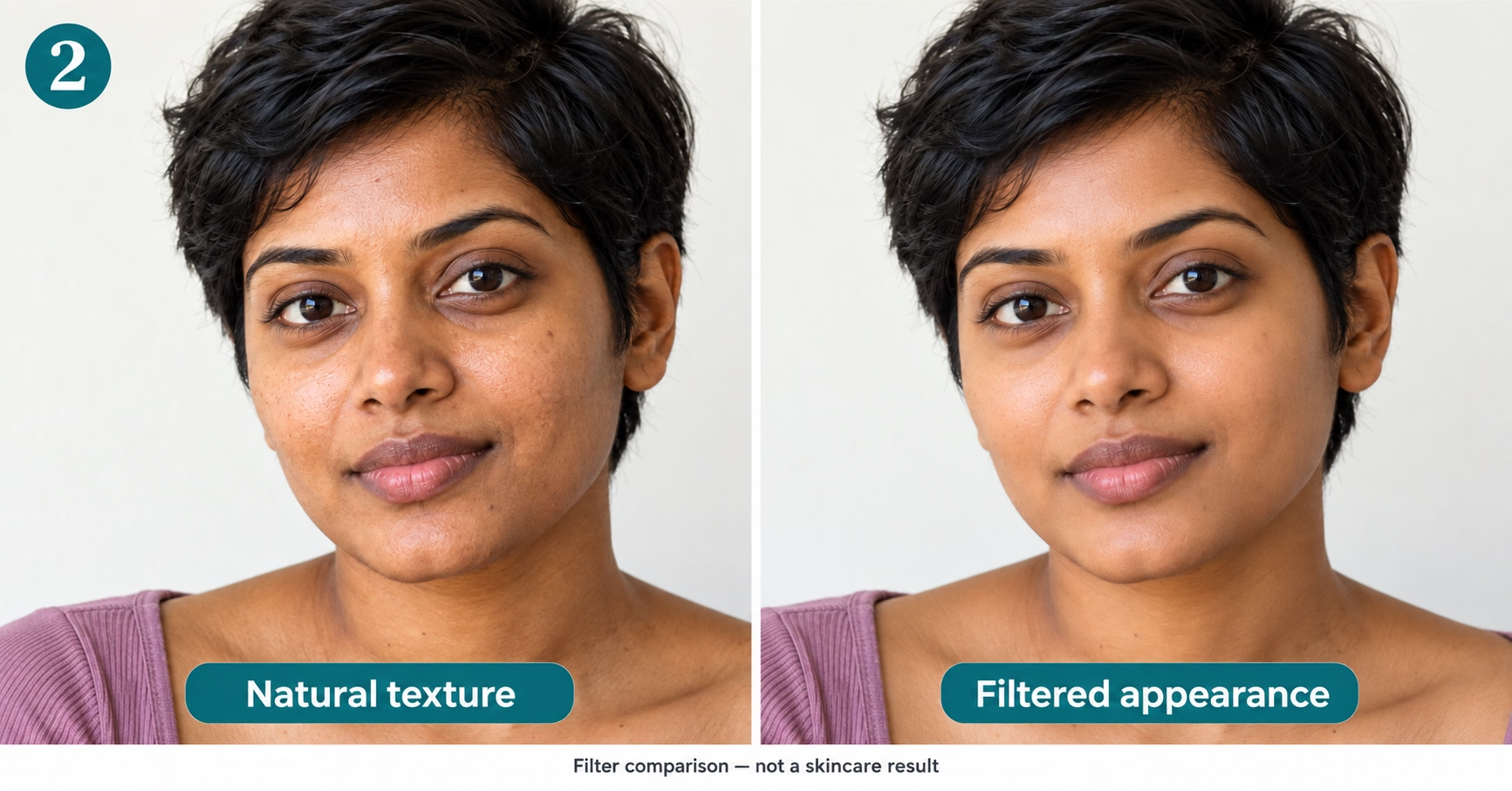
Healthy skin is living tissue; a filtered face is an image. A photograph may look attractive, but it does not show everything about comfort, symptoms or a person’s skin condition.
A beauty filter can soften small details, blur uneven colour or change how light and shadow appear. Makeup and lighting can also affect the result. Even an unfiltered photograph shows only one moment from one angle.
This does not mean every smooth portrait is edited. It means you cannot reliably decide how healthy someone’s skin is from a post—or use that post as your treatment target.
| What you notice | What it can mean | A more useful question |
|---|---|---|
| No visible pores in a photo | Small details may be hidden by distance, lighting, makeup or editing. | Am I comparing similar images? |
| Pores on your nose | Visible openings are part of facial skin; their prominence varies. | Is there a new problem, or familiar texture? |
| A bright “glow” | Shine and light reflection do not establish skin health. | Does my skin feel comfortable? |
| New itching or a rash | This needs attention rather than a smoothing filter. | What changed, and do I need advice? |
| A lighter-looking face | Exposure and editing can change apparent colour. | Am I confusing lighter skin with healthier skin? |
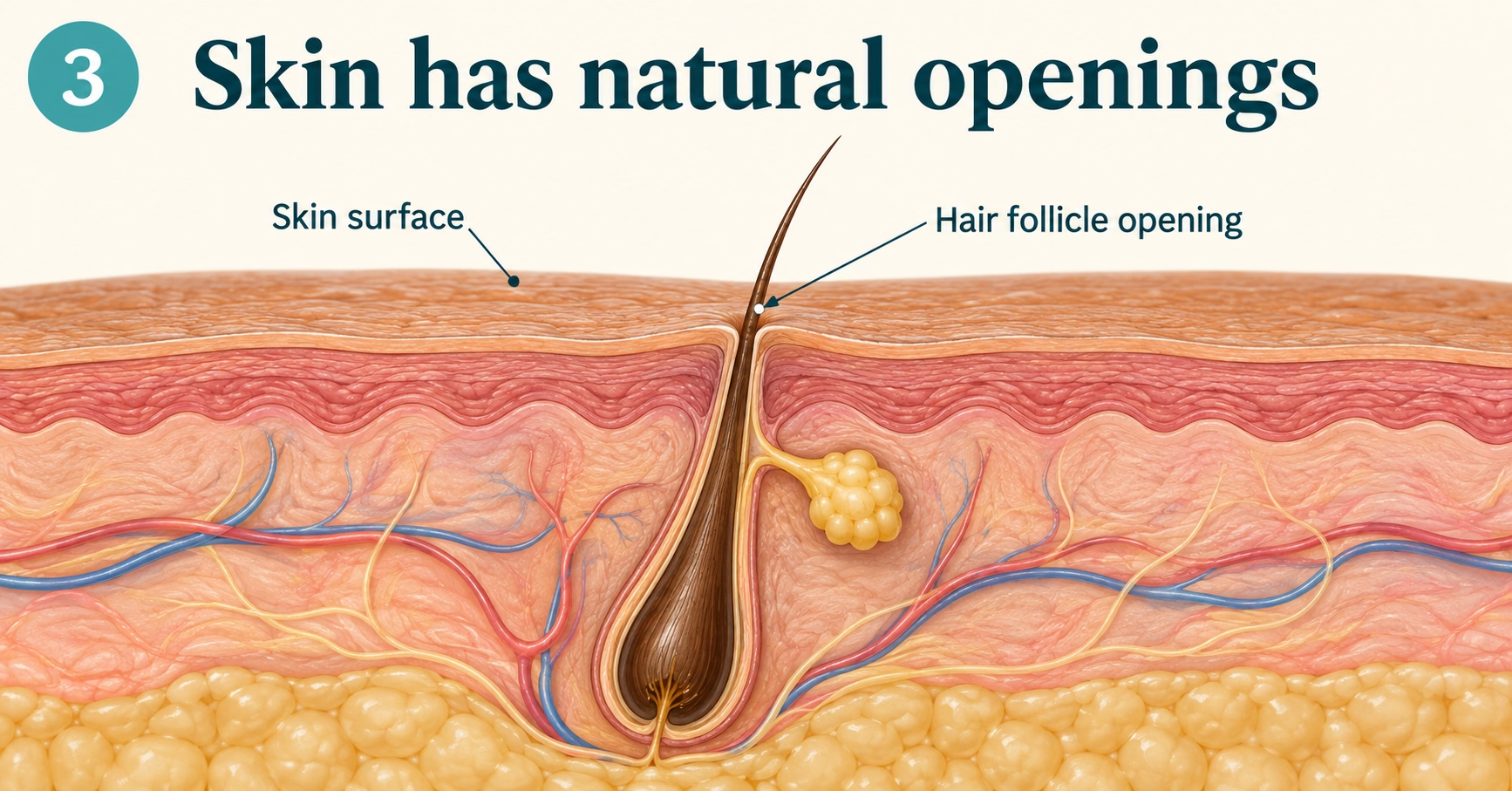
Why does real skin have visible pores?
Pores are small openings at the skin surface. The facial openings people commonly notice are associated with hair follicles and oil glands. They are part of skin structure, not something a cream should erase.[1]
Their appearance varies. Oil production, follicle size, ageing and sun damage can influence how noticeable they become.[1] Two people using the same routine may still have different-looking pores.
Visible pores alone do not prove that your face is dirty. However, clogged pores and acne can make openings more noticeable. Those concerns can be addressed without expecting a completely texture-free face.[2]
Can skincare make pores less noticeable?
Sometimes. Appropriate care can improve their appearance, especially when oiliness or blockage contributes. The American Academy of Dermatology recommends gentle cleansing, suitable products and sun protection as part of care for noticeable pores.[2]
That is different from making skin permanently poreless. Be cautious when a product promises to “erase” every pore. Ask what the claim actually means and whether it describes a temporary visual effect or a tested change.
Some people may benefit from treatment for acne or another specific concern. Treatment should fit the problem. There is no need to start several strong products merely because normal pores show in a close-up.
“Care for the skin you live in. Let comfort, protection and realistic progress guide you—not a filter’s version of your face.”
What should you aim for instead of poreless skin?
A useful goal names something you can assess: less uncomfortable dryness, fewer painful pimples, or a routine you can follow comfortably. “Look like this filtered face” does not give you a fair measure of progress.
- Comfort: notice persistent itching, soreness, tightness or burning.
- Care: choose gentle cleansing and appropriate moisture rather than chasing a stripped, squeaky feeling.
- Protection: make sun protection part of the routine.
- Progress: track the particular concern you are treating.
- Practicality: choose products that fit your budget and daily life.
These are useful observations, not a home health certificate. Skin can look smooth and still have a problem. It can also have visible pores, fine facial hair or lines without needing treatment for every feature.
You may still enjoy makeup or want cosmetic improvement. That choice is personal. Accepting normal texture does not require you to give up treatment for acne, troublesome pigmentation or a concern that affects your confidence.
Healthy skin does not have one colour
Lighter skin is not a better skincare outcome. Indian skin tones vary widely, and there is no single shade everyone should aim for. If you are treating dark marks, define the concern clearly rather than trying to change your natural colour.
Irritating products can themselves contribute to dark marks, particularly in darker skin tones. The cause of pigmentation matters when choosing care.[3]
How to build a routine with realistic expectations
Start with a manageable foundation. The American Academy of Dermatology describes cleansing, moisturising and sun protection as a simple approach that can also reduce costs.[4]
- Cleanse gently. Use a suitable cleanser without aggressive rubbing. Avoid repeatedly washing just because you can see pores.
- Choose comfortable moisture. Look for a texture that suits your needs. A routine should not leave you persistently dry or uncomfortable.
- Protect against the sun. Use shade, clothing and suitable sunscreen. Choose broad-spectrum protection with SPF 30 or higher, and follow application and reapplication directions.[4]
- Add treatment for a clear reason. Identify the concern first. Get individual advice when you are unsure what it is.
- Introduce changes thoughtfully. Keep track of what you add. Follow a prescribed combination as instructed rather than changing it yourself.
You do not need a ten-step routine to prove you care about your skin. With a limited budget, keep the purpose of each purchase clear. A product that duplicates another step may add expense without answering your concern.
Choose for your own setting too. A humid Mumbai commute and a dry, air-conditioned office may make the same texture feel different. Your comfort matters more than a trend calling one finish “perfect.”
Avoid scrubbing your way towards a filter
Repeated scrubbing or combining strong exfoliating products can irritate skin. Exfoliation means removing surface skin cells; it is not necessary for everyone. The appropriate method depends on your skin and other treatments.[5]
Do not use discomfort as proof of deep cleaning. Pause a suspected irritating cosmetic and seek advice if symptoms persist. Do not add another acid to correct a reaction caused by the first.

When is texture a reason to seek advice?
Seek assessment when texture comes with persistent symptoms, a significant new change or a condition that is not improving. You do not need to dismiss a genuine concern just because “all skin has texture.”
- Persistent or recurring rash: itching, cracking or blistering may need assessment. Inflammation may look brown, purple or grey on darker skin rather than bright red.[6]
- Painful or scarring acne: seek help rather than repeatedly trying pore products.[7]
- A changing mark: get a mole checked if it changes size, shape or colour, or becomes itchy, bleeds or crusts.[8]
Bring your product list and explain when the change began. An edited selfie is less useful than clear, unfiltered photos showing the concern over time.
If you track progress, use similar lighting, distance and angles, without filters. Check the concern occasionally rather than inspecting every pore repeatedly. If appearance worries interfere with everyday life, speak with a qualified health professional.
Frequently asked questions
Does everyone have pores?
Pores are normal skin openings. Their visibility varies, so they may be difficult to see in some faces or photographs. Not seeing them in an image does not mean they are absent.
Are visible pores the same as blackheads?
No. A visible opening is not automatically blocked. Blackheads are a type of acne. If you are unsure what the dots or bumps are, avoid squeezing and get advice.
Does a glossy face mean healthy skin?
No. Shine alone cannot establish health. Lighting, cosmetics and surface oil can affect appearance. Consider symptoms and your specific concerns instead of using gloss as a score.
Can makeup give a smoother appearance?
Yes, makeup can change how texture looks. That cosmetic effect is different from treating a skin condition. Choose products that suit you and remove them gently.
Should I remove fine facial hair for healthier skin?
Visible fine facial hair alone is not a reason you must remove it. Hair removal is a personal cosmetic choice. Ask for advice about a sudden or concerning change in hair growth.
Can a filter show how well a product works?
A filtered picture cannot reliably establish results. Look for fair comparisons and information about the actual product. A visual illustration is not clinical evidence.
Is it wrong to want smoother skin?
No. You can choose cosmetic care while keeping realistic goals. The useful distinction is between improving a concern and expecting real skin to lose every visible feature.
Choose care you can live with
Let your next skincare decision answer a real need. Keep the routine gentle and practical, assess genuine changes and get help when needed. Your face does not need to resemble an edited image to deserve good care.
Dr Sufi’s Wellness is the author’s brand. This article provides general skincare education and does not replace an individual medical assessment.
References and further reading
- DermNet: Enlarged pores
- American Academy of Dermatology: What can treat large facial pores?
- American Academy of Dermatology: Fading dark spots in darker skin tones
- American Academy of Dermatology: Skin care on a budget
- American Academy of Dermatology: How to safely exfoliate at home
- NHS: Contact dermatitis
- NHS: Acne
- NHS: Moles