Can your skin type change? Yes—and noticing that your usual face wash or moisturiser no longer feels right can be a reason to review your routine. But one shiny afternoon or one tight cheek does not prove a permanent change.
I will help you separate a lasting shift in your usual pattern from a temporary concern. You will learn what to observe, which everyday factors matter, and when a change needs professional assessment rather than another product.
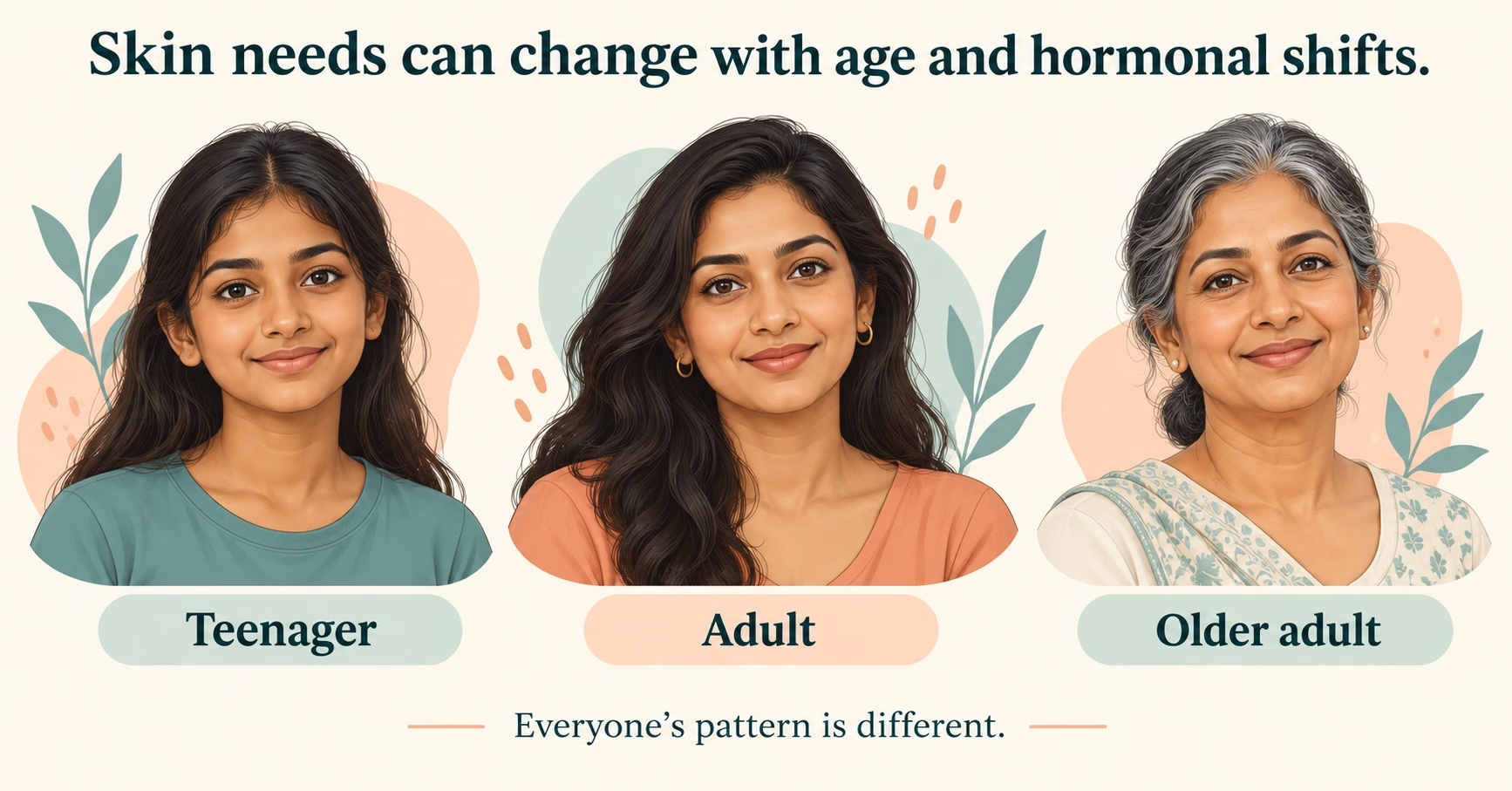
Your skin’s usual oily, dry, or mixed pattern can change over time. Age, hormonal changes, surroundings, and some medicines can influence what you notice. Cleveland Clinic describes changes across life stages and seasons. [1]
New dryness or irritation may also reflect a current skin concern rather than a completely new type. Record the pattern and symptoms separately before choosing your next step.

Can your skin type change, or is it a temporary condition?
Both are possible. Skin type describes your usual pattern. A current concern describes something you notice now, such as an itchy patch, roughness, or discomfort after washing. These descriptions can overlap.
Useful everyday labels include oily, dry, combination, and normal or balanced. Combination means some areas are oilier while others are drier. [2] They help you organise choices; they are not a complete diagnosis.
If your forehead has usually been shiny but your cheeks feel tight after a new cleanser, write down both facts. Do not immediately decide your whole face has become dry. Harsh washing products can contribute to dryness. [3]
A repeated change across ordinary days deserves more attention than a single unusual moment. You do not have to prove whether it is permanent before asking for help.
Why might your usual skin pattern change?
Changes can come from life stages, surroundings, products, medicines, or health concerns. Do not assume there is one cause for everyone.
Age and changing oil production
With age, skin produces less of its natural oil, called sebum, and dryness becomes more common. [3] A routine selected years ago may therefore deserve a review rather than automatic replacement with the same products.
This does not mean everyone follows a fixed sequence from oily to normal to dry. Describe what actually happens to you. An age-based product label cannot predict every individual need.
Puberty and other hormonal changes
Hormonal changes can affect skin. Acne is commonly linked with puberty and can also occur around other hormonal changes. [4] A breakout is a concern to assess, not by itself a new skin-type label.
Pregnancy and breastfeeding can be times when skin changes, but they also require careful product selection. [1] Ask for ingredient-specific advice rather than assuming your previous treatment remains suitable.
Menopause
The AAD describes dryness and other skin changes during menopause. Some people also experience acne. [5] Your routine may need adjustment, but you should not treat every change as an unavoidable problem to manage alone.
Weather, indoor conditions, and habits
Dry surroundings, excessive air conditioning, frequent bathing, and contact with harsh cleaning products can contribute to dry skin. [6] That is useful context when judging a seasonal or travel-related change.
In India, record your location and surroundings. Outdoor travel in Mumbai and a day inside an air-conditioned office are different situations. Another city or season may bring different experiences. There is no single routine for every Indian climate.
Medicines and underlying concerns
Some medicines and health conditions can contribute to excessive dryness. [3] If a change follows treatment, tell your prescriber. Do not stop a medicine yourself because you suspect it affected your skin.
Bring the medicine name, product list, and timing to the discussion. A clear account is more useful than trying to identify the cause from an online photograph.
How can you interpret a change sensibly?
Compare like with like and keep the cause open until you have enough information. Use the table as an observation guide, not a diagnostic test.
| What you notice | Question to ask | Useful next step |
|---|---|---|
| Tightness after a new face wash | Did the sensation begin after changing it? | Review the cleanser and record the reaction. |
| Dryness in a different environment | What changed in surroundings or routine? | Compare several ordinary days. |
| A gradual change over years | Do the old products still fit current needs? | Review everyday care. |
| An itchy patch that returns | Is this a concern needing assessment? | Seek advice instead of assigning a new type. |

Also compare different areas. Your forehead, cheeks, hands, and legs do not have the same routine or exposures. A shiny nose does not tell you what your hands need.
Sensitivity can occur alongside oily, dry, or combination skin. [1] If you notice burning or a rash, make that a separate concern rather than hiding it inside a skin-type label.
How to track your skin before buying new products
A simple record helps you recognise repeated patterns. You do not need a device or a perfect label to begin.
- Write the usual pattern. Describe what your skin normally does in your current routine.
- Record the change. Use words such as shiny, tight, rough, itchy, or sore.
- Note where and when. Include the area and whether it happened after washing or throughout the day.
- Add context. Record new products, treatment, travel, or changes in surroundings.
- Review repeated observations. Bring them to a clinician if symptoms persist or worry you.
An example entry might read: “Cheeks tight after washing; forehead shiny later; started a new face wash.” This is a sample note, not a patient story or proof of a particular cause.
What should you compare in your notes?
Compare mornings with mornings and evenings with evenings where possible. If one entry follows exercise and another follows a quiet day, note that difference. You are looking for a pattern, not trying to make every observation match.
Separate appearance from comfort. Write “nose shiny” and “cheeks sore” as two entries rather than averaging them into one label. If soreness is the main problem, make it the priority question.
Keep your product names beside the notes. This makes it easier to explain what you used, even when packaging looks similar or several products promise the same benefit.
Keep the exercise comfortable. Do not scrub, repeatedly stretch your skin, or leave it painfully dry to force a test result. Continue necessary care and follow prescribed treatment advice.
If you take photographs, use similar lighting and avoid filters. They can help document a visible change, but they do not diagnose it.
How should you adjust your routine?
Start with the step that no longer feels suitable, rather than replacing everything. Cleansing, moisturising, and sun protection remain a useful basic foundation. [2]
Keep cleansing gentle
Use a gentle cleanser, lukewarm water, and fingertips. Avoid scrubbing, and pat dry with a soft towel. [8] Clean should not have to mean uncomfortable.
Match moisture care to current needs
For dry skin, fragrance-free creams or ointments may help. Apply moisturiser after washing while skin is still slightly damp. [9] Oily skin also benefits from suitable moisturising; shine is not a reason to strip away all moisture care. [10]
Make one clear change at a time
Decide what you want to improve, then keep a record. Changing several products together makes it harder to work out what helped or troubled your skin.
Keep your budget in mind. A recent change does not automatically require a serum, toner, mask, and new cleanser. Review what you already use and give each proposed purchase a purpose.
Dr Sufi’s Wellness is Dr Sufia’s personal care brand. No particular product is required to observe your skin. Recommendations should match verified product details and your actual concern.
When should a change prompt professional advice?
Seek advice for persistent, recurring, or severe irritation. Contact dermatitis can cause dry, itchy, blistered, or cracked skin and may need assessment to identify a trigger. [7]
Also ask for help if dryness continues despite gentle care or products cause burning. [9] Do not keep testing cosmetics over an ongoing rash.
There is no universal deadline for deciding that your type has changed. Focus on comfort, repeated patterns, and symptoms that need attention.
Frequently asked questions
Can oily skin become drier as I age?
Yes, reduced natural oil with age can contribute to dryness. [3] Review your current needs rather than relying only on an old label.
Does one dry day mean I need a new routine?
Not necessarily. Record the context and whether it repeats. Ongoing discomfort deserves attention even before you decide on a new type.
Can I be oily and sensitive at the same time?
Yes. Sensitivity can overlap with other patterns. [1] Describe reactions separately from shine.
Should I keep products that suited me years ago?
Keep what still serves a clear purpose and feels suitable. Review what no longer does; you do not need to replace everything simply because time passed.
Do new pimples prove a new skin type?
No. Treat breakouts as a concern to assess separately from oiliness or dryness. Seek individual advice when they persist or worry you.
Can I force a permanent change with a strong cleanser?
Do not try to strip your skin into another type. The AAD recommends gentle cleansing for oily skin too. [10]
Your next step
Write what your skin usually does, what changed, and when it happened. Review one relevant care step and seek help when symptoms need assessment. Your routine can adapt without chasing a perfect label.
Use the observation stepsReferences and further reading
- Cleveland Clinic: Understanding skin types.
- American Academy of Dermatology: Skin care on a budget.
- American Academy of Dermatology: Dry skin causes.
- NHS: Acne.
- American Academy of Dermatology: Skin care during menopause.
- DermNet: Dry skin.
- NHS: Contact dermatitis.
- American Academy of Dermatology: Face washing 101.
- American Academy of Dermatology: Dry skin care.
- American Academy of Dermatology: Oily skin care.